
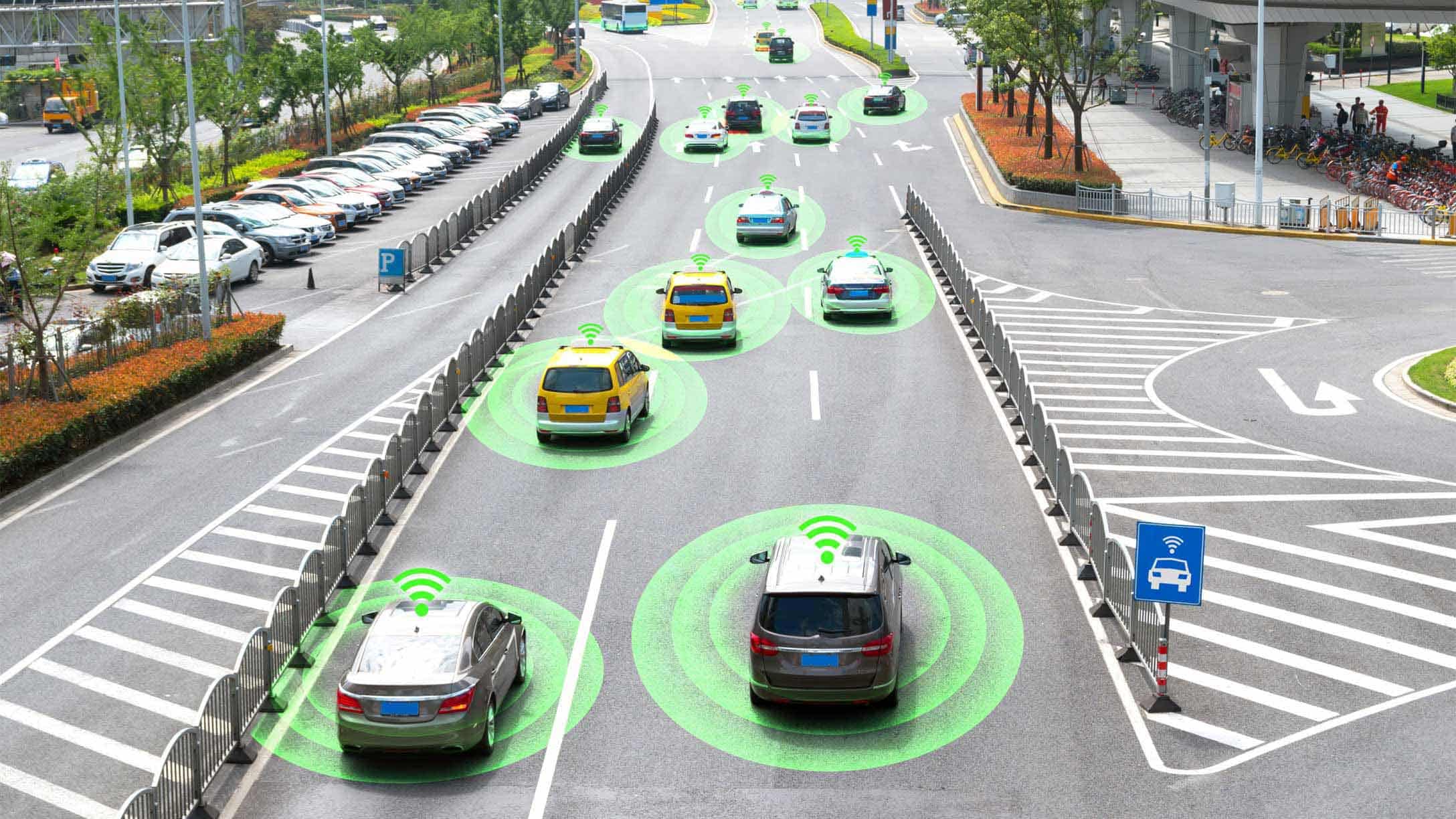
Smart roads represent one of the most significant infrastructure transformations in the history of transportation, seamlessly integrating Internet of Things (IoT) sensors, artificial intelligence, vehicle-to-everything (V2X) communication, and renewable energy systems into road networks. As of 2026, the global smart highway construction market has reached approximately $35-40 billion annually and is projected to exceed $72 billion by 2030, driven by urgent demands for enhanced safety, traffic efficiency, and environmental sustainability. The convergence of connected vehicle adoption—with 95% of new vehicles expected to be connected by 2030—and massive government infrastructure investments creates the conditions for an unprecedented reimagining of how humans interact with roads.
This transformation will reshape driving through four interconnected dimensions: dramatically improved safety through real-time hazard detection and automated emergency response; revolutionary traffic management via AI-powered adaptive systems that reduce congestion and emissions; seamless vehicle-to-infrastructure integration enabling autonomous driving; and intelligent energy systems supporting electric vehicle charging and grid stability. The implementation of smart roads is not speculative—pilot projects in Michigan, Texas, and across Europe are already validating these technologies, while regulatory frameworks are evolving to support nationwide deployment.
The Technological Architecture of Smart Roads
Smart roads function as intelligent ecosystems that extend far beyond traditional asphalt. The foundational technology comprises embedded IoT sensors, cameras, and radar systems distributed throughout road infrastructure, creating continuous monitoring of traffic flow, weather conditions, road surface integrity, and vehicle behavior. These sensors detect everything from vehicle speed and count to pavement deterioration and environmental hazards, transmitting data in real time to edge computing devices positioned throughout the network.
The second critical layer involves Vehicle-to-Everything (V2X) communication, which enables vehicles to exchange information with road infrastructure (V2I), other vehicles (V2V), and networked systems (V2N). Cellular V2X (C-V2X), which operates over 4G/5G networks, has emerged as the dominant standard globally due to its wider coverage, improved scalability, and natural integration with existing telecommunications infrastructure. By 2026-2029, mass deployment of 5G-V2X Direct technologies is expected across Europe, enabling vehicles to communicate critical safety information with ultra-low latency—the difference between collision avoidance and catastrophic accident.
AI-powered traffic management represents the cognitive layer of smart roads. Adaptive traffic signal systems continuously analyze real-time data and adjust signal timing dynamically rather than operating on fixed, pre-programmed schedules. Machine learning algorithms identify traffic patterns, predict congestion formation before it occurs, and optimize vehicle flow across entire networked corridors rather than individual intersections. Edge computing architecture processes this data locally to ensure minimal latency—critical for safety-critical decisions requiring sub-second response times.
Energy generation and storage form an increasingly critical fourth dimension. Solar-integrated pavements and kinetic energy harvesting systems embedded in road surfaces generate electricity during operation. At just 15% efficiency, solar roadway infrastructure could theoretically generate three times total electricity demand for an entire nation. Wireless charging infrastructure for electric vehicles, based on inductive power transfer principles, allows vehicles to receive charging power while driving, eliminating range anxiety and downtime.
Safety Transformation: From Reactive to Predictive
The most compelling case for smart road implementation lies in accident prevention and emergency response. Current road-based transportation systems remain fundamentally reactive—accidents occur, then emergency response activates. Smart roads fundamentally invert this paradigm to predict, prevent, and respond instantaneously to hazards.
Real-time accident detection systems utilizing AI-powered computer vision can identify collisions and dangerous situations in under three seconds, automatically triggering emergency alerts to ambulances, hospitals, traffic management centers, and law enforcement. Cities implementing comprehensive smart traffic solutions report 25-35% reductions in road accidents compared to baseline conditions. AI algorithms analyze vehicle kinematics—speed, trajectory, spacing—to predict imminent collisions before they occur, enabling preventative driver warnings or autonomous braking system activation in connected vehicles.
The accident prevention mechanism operates through multiple overlapping layers. First, V2X communication allows connected vehicles to receive advance warnings about stalled vehicles, debris, or accidents ahead—often 10+ seconds before human drivers would perceive the hazard visually. Second, smart road infrastructure provides real-time hazard alerts through dynamic signage, variable speed limit adjustments, and lane closure notifications that respond immediately to changing conditions. Third, infrastructure health monitoring systems detect potholes, pavement deterioration, and structural failures before they cause accidents, triggering maintenance before dangerous conditions develop. Fourth, weather monitoring systems integrated into roadway sensors provide hyper-local precipitation, wind, and temperature data that enables context-aware speed advisories and lane allocation decisions.
The infrastructure response to detected hazards demonstrates the sophistication of integrated smart systems. When an accident is detected, the system triggers a coordinated response: variable message signs alert approaching drivers, traffic signals rebalance to route vehicles around the incident zone, emergency services are dispatched automatically with GPS coordinates and incident severity classification, and alternative route recommendations are pushed to vehicle navigation systems. This coordinated response reduces secondary collisions, which often cause more injuries than primary accidents, and accelerates medical response times.
However, critical challenges remain. Road markings and lane guidance systems must be machine-readable, not merely visible to humans—poor road maintenance can defeat autonomous vehicle collision avoidance systems. Interoperability between vehicle brands, road systems across jurisdictions, and integration with legacy infrastructure presents ongoing technical challenges. Privacy concerns about continuous surveillance require robust data governance frameworks to prevent misuse of accident location data.
Traffic Management and Congestion: The Efficiency Revolution
Traditional traffic management operates on predictive timings based on historical patterns—traffic signals change according to pre-programmed schedules that may be adjusted seasonally but respond slowly to real-time conditions. Smart roads fundamentally alter this approach through continuous real-time optimization and predictive management.
Smart traffic management systems consistently deliver quantified improvements in traffic flow: 25% reduction in travel time in congested urban areas, 30-40% reduction in wait times at individual intersections, and 20% reduction in overall traffic delays. These improvements accumulate from multiple mechanisms working in concert. First, AI-powered adaptive traffic signals analyze current traffic composition in real time—detecting when congestion is building in specific directions and extending green phases accordingly rather than cycling through fixed timers. Cities implementing these systems report that traditional signal optimization can be improved by 30-40% through algorithmic fine-tuning of cycle times, split durations, and offset coordination.
Second, route optimization systems provide dynamic alternative route recommendations through navigation apps, variable message signs, and connected vehicle interfaces, preventing vehicles from funneling into congested corridors. Machine learning models identify emerging bottlenecks 15-30 minutes before they form, enabling proactive rerouting that prevents gridlock formation rather than responding to congestion already underway.
Third, congestion pricing systems informed by AI dynamically adjust tolls based on real-time demand and capacity, creating financial incentives for drivers to shift travel times or select less-congested routes. This approach reduces traffic volume by 15-25%—shifting behavior without constructing additional lane capacity. When combined with AI-powered route optimization, these systems can reduce commute times by up to 20% while actually decreasing infrastructure costs compared to capacity expansion approaches.
The environmental dividend from traffic flow optimization proves substantial. Reduced stop-and-go driving patterns—cut by 50% in optimized smart networks—directly translates to fuel consumption reduction of 10-15% and corresponding CO₂ emission reductions of 25-30%. Each minute of unnecessary idling consumes fuel and generates emissions; optimization eliminates these inefficiencies systematically.
Parking management, often overlooked in traffic discussions, represents a major component of smart road benefits. Smart parking systems guide vehicles directly to available spaces rather than forcing them to circle, reducing vehicle miles traveled by 5-15% in urban environments and cutting associated emissions proportionally. This efficiency compounds across entire transportation networks.
Vehicle Integration and the Path to Autonomous Mobility
Smart roads form the essential infrastructure foundation enabling autonomous vehicle deployment and connected vehicle services. While autonomous vehicles contain sophisticated onboard sensors and computing systems, their effectiveness depends critically on infrastructure-provided context that extends beyond onboard perception. Smart roads provide the digital and physical context layer that autonomous systems require.
V2I communication delivers real-time information about road conditions, traffic signals, lane assignments, speed limits, and hazards that autonomous vehicles cannot reliably perceive independently. When approaching an intersection, an autonomous vehicle relies on computer vision to detect traffic signals; a smart road simultaneously transmits signal status, timing information, and confidence levels that enable coordination among multiple autonomous vehicles approaching the intersection simultaneously. This coordination prevents gridlock scenarios where autonomous vehicles, each programmed conservatively, prevent traffic from flowing.
Infrastructure-provided high-precision positioning enables autonomous vehicles to localize themselves to 10-centimeter accuracy, far exceeding GPS accuracy available independently. This precision proves critical for lane-keeping on highway corridors and precise positioning at intersections. Combined with communicated information about road maintenance and pavement quality, this enables autonomous vehicles to adjust steering and suspension parameters preemptively rather than discovering potholes reactively.
The V2X ecosystem creates data network effects that improve system performance as adoption increases. With 10% vehicle connectivity, the benefits concentrate on safety warnings and traffic coordination. As connectivity approaches 50%+, network effects enable sophisticated fleet coordination where multiple autonomous vehicles coordinate acceleration, merging, and lane changes to maximize traffic flow while maintaining safety margins.
Current deployment status reflects this infrastructure dependence. While autonomous vehicles have been tested in controlled environments for years, their widespread deployment hinges on V2X infrastructure completion and standardization. The U.S. Department of Transportation released federal blueprints in late 2024 targeting 20% coverage of the national highway system by 2028. The Michigan I-94 corridor pilot and Texas SH 130 freight corridor projects are actively validating this infrastructure, with completion expected to inform nationwide deployment strategies.
Economic and Market Dimensions
The smart roads market represents a fundamental industrial transformation with profound economic implications. The global smart highway construction market reached approximately $35.09 billion in 2025 and is projected to grow to $40.69 billion in 2026, with compound annual growth rates of 15.6-16% reaching $72.79 billion by 2030. These figures encompass IoT sensors, communication infrastructure, edge computing systems, software platforms, installation, and maintenance.
The economic mechanisms driving this growth extend beyond equipment sales. Smart roads fundamentally improve logistics efficiency, reducing shipping costs, shortening delivery times, and lowering fuel expenses. A 20% reduction in shipping delays translates directly to supply chain acceleration—goods reaching markets faster, retailers restocking more efficiently, manufacturers completing production cycles quicker. For logistics companies operating on 2-5% profit margins, efficiency improvements of this magnitude materially improve profitability.
Job creation from smart infrastructure investment exceeds traditional highway construction. Public transit investments generate 70% more jobs per dollar than highway projects, and smart infrastructure deployment generates comparable multiplier effects through ongoing software development, data analytics, infrastructure management, and maintenance employment. Singapore’s smart highway initiative has generated over 5,000 clean-tech positions; Tel Aviv’s electric road infrastructure attracted $100 million in foreign direct investment. These represent the employment dynamics of infrastructure modernization rather than initial construction.
Geographic attractiveness shifts with smart infrastructure investment. Regions with advanced smart transportation networks attract logistics hubs, technology companies, and manufacturing facilities seeking efficient distribution networks. The West Midlands in the UK documented 165+ positions created following smart infrastructure investments, with foreign direct investment explicitly citing transportation efficiency as a location factor. Rural and peripheral regions equipped with smart corridors can position themselves competitively against traditional urban logistics hubs.
Environmental Sustainability and Energy Systems
Smart roads contribute to environmental sustainability through multiple mechanisms: direct emissions reduction from traffic optimization, renewable energy generation, and enabling electrified transportation networks. When fully integrated, smart road technologies enable 30% fuel consumption reduction, 25% CO₂ emission reductions, and substantial energy generation capabilities.
Energy generation from road surfaces remains somewhat speculative at mass deployment scale but demonstrates compelling potential. Solar panels embedded in or integrated adjacent to road surfaces can generate electricity during vehicle passage and periods of non-use. Current prototypes operate at 10-15% efficiency; theoretical maximum efficiency approaches 25-30%, which would enable solar roads to generate significantly more electricity than consumed by embedded systems while contributing to grid supplies. Kinetic energy harvesting from vehicle weight and movement provides supplementary generation without additional infrastructure.
The wireless charging capability transforms electric vehicle (EV) adoption economics. Traditional EV deployment requires either dramatic battery capacity increases to extend range or dense charging networks requiring land development and electrical grid capacity expansion. Wireless charging infrastructure enables vehicles to receive power while driving, reducing required battery capacity and associated material costs. This capability proves particularly valuable for commercial vehicles—buses, trucks, delivery vehicles—where charging infrastructure placement challenges compound affordability concerns.
Vehicle-to-Grid (V2G) and Vehicle-to-Home (V2H) capability, enabled by smart grid integration, transforms electric vehicles from pure loads to distributed energy storage assets. When parked at home or work, EV batteries can discharge to support household electricity, provide backup power during grid outages, or respond to grid demand signals by discharging during peak pricing periods. This capacity delivers genuine grid stabilization benefits, reducing required utility generation capacity and peak demand charges.
Deployment Challenges and Implementation Barriers
Despite compelling benefits and advancing technology, smart road deployment faces formidable obstacles that have limited implementation to pilot projects and early-stage corridors.
Financial constraints represent the primary barrier. Smart highway infrastructure costs approximately three times conventional road construction due to embedded systems, communication networks, and software platforms. Sustaining funding over decades of operation proves challenging within municipal and regional budgets constrained by competing priorities. Public-private partnerships (PPPs) have emerged as a funding mechanism, but they introduce cost-sharing complexities and private profit expectations that sometimes conflict with public interest objectives.
Cybersecurity vulnerabilities pose existential risks. Traffic management systems, vehicle communication networks, and power distribution infrastructure become attractive targets for sophisticated cyber attacks once they reach national scale. Ransomware attacks disabling traffic signal coordination across a metropolitan area would paralyze commerce and emergency services. GPS jamming could disable connected vehicle localization. Data breaches exposing vehicle location histories and movement patterns would violate privacy expectations. These risks require continuous software updates, encryption protocols, access controls, and security monitoring—ongoing operational costs that often exceed initial infrastructure investment.
Privacy and surveillance concerns create political and social resistance. Smart roads collect granular data about vehicle movement patterns, locations, and travel times—information with potential for abuse if accessed by authoritarian government entities, commercial data brokers, or criminal actors. Effective data governance frameworks must balance legitimate infrastructure management and safety applications against surveillance creep risks. Anonymization techniques can reduce personal identification risks, but sophisticated data analysis can often re-identify individuals through behavioral pattern analysis.
Standardization and interoperability challenges plague implementation across jurisdictions. Different regions have adopted varying V2X communication standards (DSRC, C-V2X, 5G-V2X), creating fragmented ecosystems where vehicles may not communicate with infrastructure across borders. North America, Europe, and Asia-Pacific have partially divergent approaches requiring years of harmonization before seamless cross-border travel becomes possible.
Technical expertise shortages limit implementation capacity. Smart infrastructure deployment requires expertise in IoT systems, telecommunications, cybersecurity, data analytics, and traffic engineering—skills in short supply globally. Developing countries face particular challenges retaining qualified personnel given international competition for limited talent pools.
Regulatory frameworks remain underdeveloped. Liability questions for autonomous vehicle accidents, data ownership and privacy regulations, cybersecurity standards, and V2X communication protocols require legislative resolution that proceeds slowly relative to technology advancement. Insurance mechanisms for smart vehicle accidents remain unclear when responsibility could rest with vehicle manufacturers, infrastructure operators, vehicle owners, or cybersecurity failures.
Road maintenance and infrastructure quality prerequisites often remain unmet. Autonomous vehicles depend on readable road markings, stable lane geometry, and consistent surface conditions. Many existing road networks suffer from deferred maintenance, poor markings, and structural degradation that must be addressed before autonomous vehicle deployment becomes viable.
Key Performance Benefits Summary
Smart roads deliver quantified improvements across transportation metrics. Travel time reduction of approximately 25% in congested urban corridors significantly improves commute experiences and increases personal time value. Accident reduction of 25-35% translates directly to fewer injuries, deaths, and insurance costs. Fuel consumption decreases of 30% reduce both vehicle operating costs and transportation sector emissions. CO₂ emission reductions of 25% support climate mitigation objectives. Stop-and-go pattern reduction of 50% improves traffic flow consistency and reduces driver frustration. These improvements compound when multiple smart systems operate in coordination rather than isolation.
Future Trajectory and Implementation Timeline
The transformation of roads from passive infrastructure to active intelligent systems will progress in overlapping phases through 2030 and beyond. The immediate phase (2025-2027) focuses on V2X infrastructure standardization and pilot corridor validation. The U.S. Department of Transportation’s target of 20% national highway coverage by 2028 drives this timeline, with funding mechanisms including SMART Program grants and federal transportation budgets. European Union projects (EvoRoads, CAMBER, FRODDO) are validating integrated approaches to connected and automated mobility within existing urban and highway infrastructure.
The expansion phase (2027-2030) will see scaling of proven technologies from pilots to broader deployment across major urban corridors and freight routes. C-V2X mass vehicle deployment accelerates between 2026-2029 as manufacturing ramps production of connected vehicle platforms. Adaptive traffic signal systems will increasingly replace fixed-timing systems in urban areas as municipalities recognize congestion reduction and cost benefits. Wireless EV charging infrastructure begins deployment along major freight corridors supporting rapid decarbonization of commercial transportation.
The maturation phase (2030+) will feature integration of smart roads with smart city systems, creating comprehensive urban mobility ecosystems where transportation, energy, and emergency services operate as coordinated digital networks. Autonomous vehicle deployment accelerates as infrastructure matures, supported by V2X communication, high-precision positioning, and coordinated traffic management. Energy systems integration enables vehicle fleets to provide grid stabilization services, transforming vehicles from pure consumption loads to distributed energy assets.
Conclusion
Smart roads represent the convergence of transportation, information technology, energy systems, and urban infrastructure into integrated intelligent networks that fundamentally alter how humans travel. By 2030, basic smart infrastructure will be operational across major transportation corridors in developed regions, delivering quantified benefits in safety, efficiency, emissions, and economic productivity. The $72+ billion market represents not merely equipment and construction but transformation of how societies manage mobility and energy.
The implementation path remains challenging—financial constraints, cybersecurity risks, regulatory uncertainty, and technical expertise shortages will slow deployment relative to technology capability. However, the magnitude of benefits—50% accident reduction in some applications, 25% travel time reduction, 30% fuel consumption decrease—creates powerful incentives for continued advancement despite obstacles.
The era of passive roads is ending. The intelligent, responsive, connected road systems of 2030 and beyond will reshape urban mobility, enable widespread autonomous vehicle deployment, accelerate electrification of transportation, and create entirely new business categories. Regions and nations that successfully navigate the technical, financial, and regulatory challenges will capture disproportionate economic benefits. Those that delay face competitive disadvantage in logistics efficiency, transportation safety, and environmental performance.