
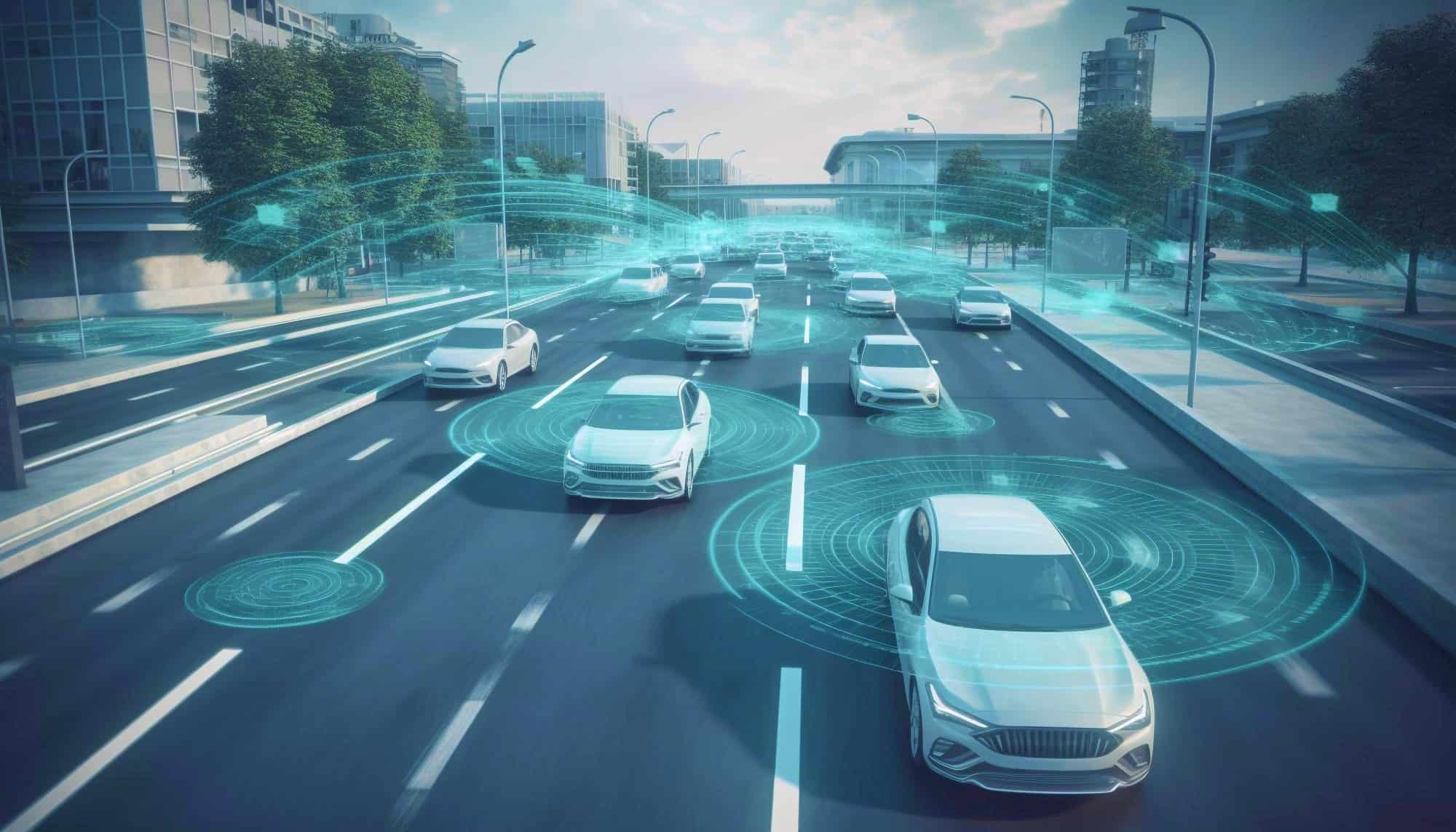
Artificial intelligence is fundamentally transforming road safety through real-time threat detection, predictive analytics, and automated intervention systems that operate at speeds exceeding human reaction capability. As of 2026, AI-powered road safety innovations span autonomous emergency braking (AEB) systems, driver fatigue detection, pedestrian recognition, intelligent traffic management, and vehicle-to-everything (V2X) communication networks that collectively demonstrate the potential to prevent 26-79% of crashes depending on technology implementation and deployment maturity. The convergence of advanced sensors (LiDAR detecting objects 200+ meters away, radar operating through adverse weather, high-speed cameras processing 120 frames per second) with machine learning algorithms making decisions in sub-100-millisecond timeframes creates an unprecedented technical capability to anticipate hazards before they materialize into collisions.
The evidence base for these innovations is increasingly compelling. Fleets using AI driver monitoring systems have achieved 90% reductions in fatigue-related incidents, while pedestrian detection systems deployed across industrial environments eliminate 60-85% of near-miss collisions within the first year. The National Highway Traffic Safety Administration estimates that vehicle-to-infrastructure communication systems could prevent up to 79% of crashes involving non-impaired drivers. Real-world deployments—from Indiana’s V2X queue trucks eliminating 80% of hard-braking events to Utah’s connected snowplows reducing crash rates by 216%—validate these laboratory findings across diverse operational contexts. However, realizing this accident prevention potential requires overcoming substantial technical, regulatory, and infrastructure challenges that will determine whether these innovations become universal safety standards or remain luxury features concentrated in premium vehicles.
The Technology Foundation: Sensors, Algorithms, and Real-Time Processing
Modern AI road safety systems function as integrated perception-decision-action systems that compress the threat detection and response cycle from the 1.5-second human reaction time to sub-100-millisecond computer response. The foundational technology layer comprises heterogeneous sensor systems that provide complementary perception capabilities. LiDAR (Light Detection and Ranging) transmits up to 1 million laser pulses per second, creating precise 3D maps of the environment with detection ranges extending beyond 200 meters, proving particularly effective for detecting obstacles in clear conditions. Radar operates across 76-81 GHz frequency bands, achieving 250-meter detection ranges and maintaining effectiveness through fog, rain, and snow that defeats optical systems. Cameras capture high-resolution visual data at up to 120 frames per second, essential for object classification, traffic sign recognition, and pedestrian identification that radar and LiDAR cannot independently perform.
The critical innovation involves sensor fusion—the algorithmic integration of these complementary sensor modalities into unified perception models. Rather than treating each sensor as an independent data stream, AI systems combine LiDAR’s precise distance measurement, radar’s weather penetration, and camera’s semantic understanding into fused representations that compensate for individual sensor weaknesses. This fusion approach reduces error rates by up to 90% compared to single-sensor systems while achieving system-level reliability exceeding 99%. The computational challenge of fusing multi-gigabit sensor data streams and making safety-critical decisions in real time is addressed through edge computing architectures that process data on vehicle-mounted or roadside processors rather than relying on cloud connectivity that introduces unacceptable latency.
The algorithms processing this sensor data employ deep learning architectures specifically optimized for real-time safety applications. Convolutional Neural Networks (CNNs) excel at extracting spatial features from camera imagery—detecting pedestrians, vehicles, lane markings, and traffic signs with 95%+ accuracy in normal conditions. Long Short-Term Memory (LSTM) networks capture temporal patterns essential for predicting vehicle trajectories and identifying dangerous driving behaviors like sudden lane changes or erratic steering. Graph Neural Networks (GNNs) model the complex relationships within traffic networks, enabling systems to understand not just immediate surroundings but traffic flow patterns, intersection dynamics, and cascade collision risks. The CNN+LSTM+GNN combination represents the state-of-the-art for predicting traffic accident risks within 5-second prediction windows, enabling preemptive warnings or automated braking before imminent collisions occur.
Autonomous Emergency Braking: From Low-Speed to Highway-Speed Collision Prevention
Automatic Emergency Braking systems represent the most mature AI safety innovation, now mandated in all new vehicles in major markets by regulatory requirement. The NHTSA issued sweeping regulations requiring all new light vehicles to include advanced AEB capabilities by 2029, with systems capable of preventing collisions at speeds up to 62 mph and detecting pedestrians in both daylight and low-light conditions. Current systems demonstrate 40% reduction in rear-end collisions—a significant safety improvement, yet the technical frontier involves expanding AEB effectiveness from low-speed urban scenarios to highway speeds where physics present radically different challenges.
Low-speed AEB systems benefit from forgiving physics: a vehicle traveling 30 mph requires approximately 40 feet to stop safely, providing reaction time for system detection and braking activation. Highway-speed AEB must overcome fundamentally different constraints. A vehicle traveling 120 km/h (75 mph) requires significantly more stopping distance proportional to velocity squared; at this speed, the time between initial object detection and braking application shrinks to milliseconds where perception accuracy margins vanish. Additionally, highway scenarios require detecting not only large vehicles but also small, low-reflectivity, fast-moving objects—a child darting across a highway, a motorcycle weaving between lanes, or even a cardboard box obstructing the roadway—under low-light conditions where conventional sensors degrade significantly.
Ambarella’s Oculii 4D imaging radar technology demonstrates breakthrough performance in high-speed AEB scenarios. Third-party testing by global automotive OEMs validated the system detecting small objects (water bottle-size), pedestrian dummies, and motorcycles at distances beyond 100 meters in both daylight and low-light conditions at highway speeds. Critically, the system suppressed false positives—the recurring failure mode where traditional radar systems trigger unnecessary braking, risking multi-car pileups more dangerous than the prevented collision itself. The 4D architecture combines high angular resolution (distinguishing closely-spaced objects), enhanced vertical separation (differentiating road debris from genuine obstacles), and AI-powered waveform adaptation that dynamically adjusts radar transmission patterns based on environmental conditions rather than using fixed parameters that prove suboptimal across diverse scenarios.
The scalability barrier for high-speed AEB involves the traditional tradeoff between system performance and cost. Previous 4D radar approaches required massive antenna arrays generating enormous data volumes, demanding expensive dedicated processing hardware. Oculii’s architecture achieves comparable performance using only 6 transmit and 8 receive antennas, generating dramatically less data while maintaining high-resolution perception. This cost reduction is essential for deploying advanced AEB across the full vehicle market spectrum rather than limiting it to premium vehicles—a critical requirement for achieving population-level accident reduction.
Driver Monitoring: Detecting Fatigue Before Crisis
Driver fatigue and drowsiness represent a documented but substantially underreported cause of road accidents. The AAA Foundation estimates that 17.6% of fatal crashes involve drowsy drivers—ten times higher than official law enforcement reports, which rely on visible indicators of fatigue that often prove unreliable. A truck driver experiencing microsleep (unconsciousness lasting just 4-5 seconds) travels approximately 100 yards at highway speed with zero vehicle control—sufficient distance to veer into oncoming traffic, barrel off roadways, or collide with vehicles ahead. Until recently, detecting drowsiness before critical events was impossible; drivers rarely experience dramatic yawning or obvious drowsiness signals until consciousness is already compromised.
AI driver monitoring systems revolutionize fatigue detection through continuous analysis of physiological and behavioral indicators invisible to human observation. The gold-standard metric, PERCLOS (Percentage of Eyelid Closure over time), measures what percentage of time the driver’s eyes are closed—not as an intermittent observation but as continuous measurement across 100% of driving time. When PERCLOS measurements exceed defined thresholds indicating eyelid closure averaging more than 60% over a rolling window, the system triggers alerts 30-60 seconds before critical drowsiness incidents occur. This advance warning—seemingly short in absolute terms—proves critical in practice because it interrupts the fatigue-to-incident chain at its earliest stage, enabling driver countermeasures (pulling over, reducing speed, engaging cooling mechanisms) before cognitive capability deteriorates fatally.
Modern AI fatigue detection extends far beyond PERCLOS measurement through multi-factor analysis that captures subtle fatigue indicators preceding obvious drowsiness. Blink pattern changes—decreased blink frequency, increased blink duration, or altered blink velocity—precede PERCLOS elevation and signal emerging fatigue. Head positioning analysis detects the characteristic head nodding and drooping associated with drowsiness before conscious awareness. Facial indicator analysis identifies eye rubbing, drooping eyelids, and yawning frequencies. Critically, research indicates that 77% of drowsy driving events are detected through these multi-factor indicators rather than yawning alone—a finding that explains why simpler systems relying on single indicators miss most fatigue events.
The operational impact of AI fatigue detection proves dramatic in fleet environments. Companies deploying Motive’s AI driver safety systems achieved 80% accident reduction, while Seeing Machines’ Guardian system delivers verified 90%+ fatigue-related incident reduction, substantiating the technology’s effectiveness beyond laboratory validation. The mechanism operates through real-time alerts (audio warnings in-cab, vibration alerts through seat or steering wheel haptics, visual dashboard indicators) that jolt drivers toward alertness when drowsiness begins physiological escalation. Manager notifications enable intervention for critical events, while predictive warnings alert drivers to emerging fatigue before acute drowsiness manifests. The psychological mechanism is worth noting: immediate, frequent feedback when drowsiness signals appear creates habit formation where drivers recognize their fatigue patterns and voluntarily take preventive action (rest stops, reduced speed, climate adjustment) rather than requiring forced intervention.
Pedestrian Detection: From Binary Detection to Contextual Understanding
Pedestrian-vehicle collisions represent one of road safety’s persistent challenges because pedestrians lack protective equipment surrounding vehicles and represent biomechanically fragile collision partners. The solution would seem straightforward—detect pedestrians and alert drivers or trigger automatic braking—but implementation proves technically subtle because robust pedestrian detection must operate across extreme variation: pedestrians standing still or moving at various speeds, wearing diverse clothing (with or without visibility-reducing items like hoods), in varied body positions (standing, bending, sitting, prostrate), across all lighting conditions (daylight, dusk, night, glare), and in cluttered scenes with occlusion from other objects.
Traditional industrial collision avoidance systems—radio frequency proximity detection, ultrasonic sensing, or basic motion detection—generate unacceptable false-positive rates, resulting in frequent, meaningless alerts that desensitize operators to warnings (the “boy who cried wolf” failure mode where frequent false alarms reduce operator vigilance and trust). AI-based pedestrian detection using deep learning computer vision addresses these problems through multiple integrated mechanisms. The system analyzes high-resolution camera imagery across 30+ frames per second, using convolutional neural networks trained on diverse pedestrian datasets to recognize human forms across pose, clothing, and environmental variation. Detection accuracy exceeds 95% in well-controlled industrial environments, with false-positive rates typically below 2% following calibration and facility-specific model training.
More sophisticated systems extend beyond binary pedestrian detection to contextual understanding. The system tracks pedestrian trajectories, predicting collision-course movements before impact-risk proximity. Detection zones around equipment dynamically adjust based on vehicle speed, direction, and payload conditions—slow-moving vehicles warrant smaller detection zones while high-speed equipment requires larger safety perimeters. Response protocols employ graduated interventions: when pedestrians approach but remain distant, subtle alerts notify operators; as proximity increases to collision-risk distances, audible warnings, visual indicators (LED light strips on equipment), and even automated equipment deceleration activate in sequence.
Real-world deployment results substantiate the safety improvements. Industrial facilities deploying AI pedestrian detection systems report 60-85% reduction in pedestrian-vehicle near-miss incidents within the first year, combined with 40-70% reduction in equipment damage from collision incidents and 5-15% operational efficiency improvements as operators gain confidence in high-traffic areas. The insurance implications prove substantial: reduced workers’ compensation costs, improved OSHA compliance scores, lower equipment damage claims, and decreased incident investigation expenses combine to create compelling ROI for deployment even before accounting for incalculable value of prevented fatalities and permanent disabilities.
Real-Time Prediction and Prevention: From Reactive to Anticipatory Safety
The most transformative AI safety innovations move beyond reactive response (detecting a crash as it occurs) to predictive prevention (identifying high-risk situations before accidents manifest). Johns Hopkins University researchers developed SafeTraffic Copilot, a large language model-based system trained on text descriptions of road conditions, numerical data (blood alcohol levels, weather conditions), satellite imagery, and on-site photography that can analyze both individual and combined crash risk factors. The system reframes crash prediction as a reasoning task, generating interpretable outputs that explain why specific road-condition combinations elevate crash risk rather than providing only probability scores. This interpretability proves critical for building stakeholder trust and enabling policy implementation—traffic engineers can understand specific infrastructure modifications that would reduce risk.
The technical approach combines multiple deep learning architectures to model spatiotemporal crash risk. CNN+LSTM+GNN models integrate spatial feature extraction (vehicle speed, acceleration, lane-changing patterns), temporal dependency modeling (how patterns evolve over time), and graph-based network relationship understanding (how conditions in adjacent road segments influence specific intersection safety). When trained on comprehensive accident datasets combining vehicle trajectory data, weather information, traffic volume, and historical crash records, these models can predict accident risk within 5-second prediction windows with meaningful accuracy. This prediction timeframe—5 seconds—translates into practical safety benefit: if a system detects incipient accident risk, vehicle safety systems have 5 seconds to execute preventive actions (speed reduction, lane steering, distance adjustment) before the predicted critical moment.
The challenges in accident prediction modeling remain substantial. Real-world accident data exhibits severe class imbalance—severe and fatal crashes represent rare occurrences within massive datasets of normal driving, creating training difficulties where models learn to predict common scenarios well but fail precisely when predicting the rare catastrophic events. Environmental variation—weather conditions, road surface properties, lighting, traffic density—introduces feature complexity that defeats simpler predictive models. Different geographic regions exhibit distinct accident patterns influenced by local driving culture, vehicle fleet composition, and infrastructure characteristics, requiring either massive datasets encompassing all relevant variation or adaptive model architectures that adjust to local conditions.
Despite these challenges, predictive models are transitioning from research prototypes to operational deployment. Machine learning approaches identifying high-risk road locations enable transportation authorities to deploy preventive infrastructure improvements (curve redesign, deceleration zones, improved lighting, enhanced drainage) proactively rather than reactively after crashes occur. Real-time prediction systems integrated into vehicles enable dynamic safety system activation—a vehicle approaching a high-risk location would automatically increase braking responsiveness, enhance collision avoidance thresholds, and increase driver alerting sensitivity, essentially tuning vehicle safety systems based on location-specific accident risk.
Vehicle-to-Everything Communication: Infrastructure-Enabled Safety
Vehicle-to-Everything (V2X) communication represents a fundamentally different safety paradigm—rather than relying solely on onboard vehicle sensors to perceive and interpret the driving environment, V2X enables vehicles to receive real-time information directly from infrastructure, other vehicles, and connected systems. A connected vehicle approaching a congested intersection receives advance notification of traffic signal timing, vehicle queues, and pedestrian presence directly from infrastructure sensors rather than attempting to perceive these conditions through its own sensors (which may be obstructed by buildings, surrounding vehicles, or environmental conditions).
The safety benefits of V2X communication are theoretically profound: the NHTSA estimates V2X systems could prevent up to 79% of crashes involving non-impaired drivers by enabling communication-based hazard warnings, collision avoidance alerts, and coordinated vehicle behavior. Real-world deployments provide validation of this theoretical potential. The Tampa Hillsborough Expressway Authority’s connected vehicle pilot deploying V2X-enabled Forward Collision Warning systems demonstrated a 9% decrease in forward collision conflict rates. Utah Department of Transportation’s connected snowplow operations—a particularly interesting use case—equipped snowplows with V2X technology enabling signal preemption and emergency route priority during snow events. Results showed 3.9-unit crash rate reduction compared to 1.8 on non-equipped routes, 22% decrease in property-damage-only crashes, and improved traffic compliance with posted speed limits.
The most compelling V2X deployment involved Indiana Department of Transportation’s queue truck digital alerts. During highway work zones where unexpected traffic queuing causes rear-end collisions, the agency deployed 53 V2X-equipped trucks transmitting digital alerts to approaching vehicles’ navigation systems approximately 2,000 feet before work zones. Results included 80% hard-braking event reduction, noticeably decreased traffic speeds, and substantially improved work zone safety. School buses equipped with V2X signal priority systems experienced 40% reduction in required stops, 13% improvement in overall travel time, and 18% speed increase—demonstrating V2X benefits extend to efficiency improvements beyond pure safety metrics.
The technical implementation of V2X involves two primary standards competing for dominance. Dedicated Short-Range Communications (DSRC) operates over dedicated frequency bands and has been deployed in limited pilot projects. Cellular V2X (C-V2X) utilizes existing 4G/5G cellular networks for vehicle communication, offering advantages in spectrum efficiency, scalability, and natural integration with existing telecommunications infrastructure. The cellular approach increasingly dominates new deployments, though global standardization remains incomplete, limiting cross-border V2X interoperability.
The infrastructure investment required for comprehensive V2X deployment proves substantial but distributes across multiple stakeholders. Roadside units (RSUs) must be deployed along corridors to communicate traffic signal timing, incident information, and weather conditions. Traffic management centers require integration with V2X networks to coordinate signal control, incident response, and dynamic speed limit adjustment. Vehicles require compatible communication hardware and software—currently available in premium vehicles and increasingly appearing in mainstream models but not yet universal. The deployment timeline suggests substantial V2X infrastructure will be operational in major metropolitan areas and highway corridors by 2030, with global coverage extending to secondary roads occurring over the following decade.
Intelligent Transportation Systems: Network-Level Safety Optimization
Intelligent Transportation Systems (ITS) represent the macro-level approach to safety optimization, treating entire road networks as integrated systems where traffic signal timing, speed management, incident detection, and pedestrian protection operate in coordination rather than isolation. Rather than optimizing individual intersections independently, ITS approaches view the network holistically, adjusting signal coordination to minimize stop-and-go traffic patterns, deploying dynamic speed limits that adjust to weather and congestion conditions, and coordinating incident response across multiple agencies.
The documented safety improvements from comprehensive ITS deployment prove substantial. Research estimates from the Federal Highway Administration indicate that effective incident management through ITS—rapid detection of accidents and vehicle breakdowns, immediate traffic rerouting through dynamic signage, and expedited emergency service dispatch—reduces accident rates by 15-20% in urban areas. Adaptive traffic signal control systems that adjust signal timing based on real-time traffic conditions rather than operating on fixed, pre-programmed schedules reduce intersection crashes by up to 25% according to the U.S. Department of Transportation. Speed management systems employing variable speed limits that dynamically adjust to weather (rain, snow, fog) and traffic conditions reduce collision severity and improve traffic flow through increased speed consistency.
The full potential of ITS approaches is captured in aggregate potential safety estimates. Comprehensive ITS implementation addressing collision avoidance, automated speed enforcement, speed control with variable limits, and driver/vehicle monitoring could reduce fatal crash rates by 26% and injury crash rates by 30%. On motorways specifically, the most effective ITS systems (collision avoidance, automated speed enforcement, variable speed limits) demonstrate potential for 10-15% injury and fatality reduction. In urban areas where collision avoidance systems are most effective, potential injury reduction reaches 30% with full implementation.
Real-world examples demonstrate these improvements: Australia’s Bruce Highway implemented variable speed-limit signs, resulting in nearly 50% reduction in rear-end crashes with severity measures showing hospitalization crashes declining from 43% to 20%. Japan’s Vehicle Information and Communication System (VICS) broadcasts real-time traffic data to vehicles, contributing to 30% reduction in congestion-related incidents. European countries deploying dynamic speed limits and lane control systems in the Netherlands and Germany significantly improved road safety during high-traffic and adverse-weather periods.
The operational challenge of ITS deployment involves data integration from diverse sources—traffic cameras, weather sensors, incident reports, vehicle telemetry, pedestrian detection systems—into unified models that inform coordinated decision-making. Edge computing architectures process data locally while also communicating relevant information to traffic management centers. Machine learning models learn typical traffic patterns, identify anomalies indicating incidents or hazardous conditions, and recommend or automatically execute optimized responses.
Challenges in Deployment and Effectiveness Realization
Despite compelling technology capabilities and real-world validation of safety benefits, numerous challenges impede the realization of AI safety innovations’ full accident prevention potential. The technical challenge of adversarial robustness—where minor, often imperceptible modifications to sensor input data cause AI systems to produce incorrect outputs—remains inadequately addressed. Computer vision systems trained on normal driving conditions may fail catastrophically when exposed to weather conditions, lighting variations, or road markings outside training distribution. A model trained predominantly on North American road markings may fail to recognize European lane markings; systems trained in daylight may struggle at dusk when lighting angles create glare conditions not well-represented in training data.
Sensor performance degradation in adverse conditions represents a persistent challenge. LiDAR performance degrades in heavy rain or snow where particles absorb and scatter laser pulses. Radar performance can suffer in certain weather conditions despite radar’s theoretical weather-robustness. Cameras struggle with heavy glare, fog, and low-light conditions. While sensor fusion compensates partially through redundancy, truly catastrophic conditions (blinding snow, heavy fog) can degrade all sensor modalities simultaneously. Cold-weather performance optimization—essential for safety systems in northern climates—remains an active research area.
The infrastructure maturity required for comprehensive V2X and intelligent transportation systems remains incomplete. Roadside unit deployment requires massive capital investment across thousands of miles of roads. Data standardization across jurisdictions remains inconsistent, limiting interoperability. In many regions, cellular network coverage proves inadequate for reliable C-V2X communication, particularly in rural areas where safety improvements might prove most valuable. The chicken-and-egg problem persists: infrastructure investment requires critical mass of connected vehicle deployment to justify costs, while vehicle manufacturers hesitate to implement V2X hardware without assurance that supporting infrastructure will be sufficiently ubiquitous.
Privacy concerns about continuous driver monitoring and location tracking create regulatory and social barriers to deployment. Driver monitoring systems collect detailed behavioral data—distraction events, fatigue patterns, dangerous maneuvers—that could be misused for surveillance, employment discrimination, or insurance discrimination if improperly governed. Location data from V2X-enabled vehicles could enable tracking of individual movements, exposing sensitive behavioral patterns. Robust data governance frameworks protecting privacy while maintaining safety benefits remain inadequately developed in most jurisdictions.
The accuracy-versus-false-positive tradeoff presents an operational challenge. Driver monitoring systems must balance fatigue detection sensitivity (avoiding missed drowsiness events) against false-positive rate (avoiding spurious alerts for normal behaviors like normal eye blinking or passenger conversations). Pedestrian detection systems must similarly balance sensitivity (avoiding missed pedestrians) against specificity (avoiding alerts for vehicles, poles, or shadows misclassified as pedestrians). Operators experiencing frequent false alarms reduce vigilance and trust in systems, potentially creating safety hazards rather than improvements.
Future Trajectory: Integration and Autonomous Vehicle Dependency
The trajectory of AI road safety innovation points toward increasingly integrated systems where vehicle-level safety features (AEB, driver monitoring, pedestrian detection), infrastructure-level coordination (ITS, V2X), and predictive analytics (accident risk prediction, high-risk location identification) operate in seamless coordination. Vehicles approaching high-risk road locations would receive real-time hazard information through V2X while simultaneously engaging enhanced onboard safety postures. Infrastructure would dynamically adjust traffic control based on real-time vehicle safety system status and collective risk assessment across the traffic network.
The practical realization of accident prevention potential depends substantially on autonomous vehicle deployment. While human drivers using AI safety systems achieve meaningful collision reduction (26-79% depending on technology), the 26-30% remaining accident rate reflects human error—distraction, fatigue, impaired judgment, aggressive behavior—that automation could theoretically eliminate entirely. However, genuine autonomous vehicle deployment remains years away from mainstream adoption, limiting the timescale for realizing full AI safety potential. In the interim, incremental AI safety improvements in human-driven vehicles represent the practical safety strategy.
Conclusion
Artificial intelligence has created unprecedented technical capability to prevent accidents through real-time threat detection, predictive analytics, and automated intervention systems operating at speeds and accuracy levels exceeding human capability. The evidence base is increasingly compelling: autonomous emergency braking systems prevent 40% of rear-end collisions; driver fatigue detection systems reduce drowsy-driving incidents by 90%; pedestrian detection systems eliminate 60-85% of industrial vehicle-pedestrian near-misses; V2X communication systems prevent up to 79% of non-impaired-driver crashes; and comprehensive intelligent transportation systems can reduce injury crashes by 30% and fatal crashes by 26%.
The deployment trajectory is accelerating. NHTSA regulations mandating AEB in all new vehicles by 2029, increasing C-V2X infrastructure deployment in major metropolitan areas, and mounting fleet experience with driver monitoring systems suggest that most new vehicles sold by 2030 will include multiple AI safety systems. The technical foundation is robust—sensor fusion architectures, deep learning algorithms, real-time processing capabilities—has proven effective across diverse operational contexts.
However, realizing the full accident prevention potential requires overcoming substantial challenges: completing infrastructure deployment for V2X and intelligent transportation systems, developing robust AI models that maintain accuracy across environmental variation, establishing privacy-protective governance frameworks, and integrating diverse safety systems into coordinated responses. The path to Vision Zero—eliminating road fatalities—remains technically possible but depends on sustained investment, regulatory mandate enforcement, and societal commitment to prioritizing safety over convenience or cost reduction.
The most transformative potential emerges when AI safety innovations are deployed not as isolated vehicle features but as integrated systems where connected vehicles, intelligent infrastructure, and predictive algorithms work in coordination. The vehicles emerging from factories in 2026 and beyond will possess accident prevention capabilities that would have seemed like science fiction a decade ago. Whether these capabilities translate into dramatic real-world safety improvements depends on how comprehensively they are deployed, how well they are integrated across stakeholders, and how effectively they are protected against the technical and social challenges that remain.