
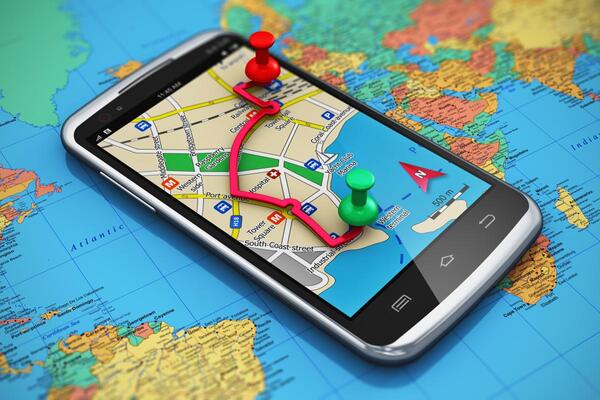
Digital navigation applications have fundamentally transformed global exploration and travel from a process dependent on paper maps and local knowledge into an intelligent, hyper-personalized digital experience. As of 2026, navigation apps represent a multi-billion-dollar industry with Google Maps commanding an overwhelming 67% market share through 1 billion monthly users, while the broader smart navigation apps market is projected to grow from $4.5 billion in 2024 to $15.4 billion by 2034 at a 12.8% compound annual growth rate. The convergence of artificial intelligence, augmented reality, offline mapping capabilities, and location-based personalization is creating a new paradigm where travelers discover destinations based on algorithmic recommendations, navigate through AR-overlaid directions, and receive real-time contextual information about their surroundings.
This transformation extends far beyond simple turn-by-turn navigation. In 2025, 42% of travelers used AI-powered tools to plan trips, 38% downloaded offline maps for connectivity independence, and 45% relied on personalized recommendations tailored to their interests and travel history. The shift from passive route-following to active exploration powered by machine learning algorithms, augmented reality, and integrated smart city infrastructure represents a fundamental rewiring of how humans discover and experience places. Simultaneously, this transformation introduces critical challenges around privacy, security, environmental impact through traffic redistribution, and the risk of algorithmic-driven overtourism that may compromise the very authenticity and accessibility of destinations that travelers seek.
The Market Evolution: From GPS Navigation to Intelligent Travel Companions
The digital navigation landscape has undergone a dramatic consolidation and sophistication over the past two decades. Google Maps, released in 2005, achieved dominance through continuous feature expansion and ecosystem integration, accumulating over 10 billion downloads and 1 billion monthly active users by 2026. Its nearest competitor, Apple Maps with 74 million users, captures approximately 25% of market share despite being introduced seven years after Google Maps, benefiting from seamless integration with iOS devices and the preference of Apple’s affluent user base. Waze, despite pioneering crowd-sourced real-time traffic reporting and maintaining superior navigation features for drivers, captures only 8% of the market despite Google’s $966 million acquisition in 2013.
The broader smart navigation apps market demonstrates robust growth momentum. The sector reached approximately $4.5 billion in 2024 with projected expansion to $15.4 billion by 2034, driven by increasing smartphone penetration in emerging markets and expanding feature sophistication. The U.S. market specifically, valued at $470 million in 2024, exhibits a 10.8% compound annual growth rate as consumers increasingly depend on mobile navigation for commuting, commerce, and leisure travel. Android maintains platform dominance at 58.3% market share due to its prevalence in emerging economies and cost-effective device options, while mobile phones represent the primary access device at 49.5% of total usage.
Technology Integration: AI, AR, and Intelligent Personalization
The functional capabilities of modern navigation apps have transcended basic route calculation to encompass comprehensive travel intelligence systems. Artificial intelligence integration has accelerated dramatically—in 2025, 42% of travelers used generative AI tools like ChatGPT or Google’s Gemini to plan entire trips, with the AI systems analyzing preferences, suggesting destinations, building detailed daily itineraries, and automatically adjusting plans based on weather changes or traveler mood shifts. These AI systems function as intelligent travel agents, handling not just route optimization but multimodal journey planning that coordinates flights, trains, buses, and rideshares with unified booking systems and connection guarantees.
Augmented reality represents the most transformative next-layer technology, enabling travelers to point their smartphone cameras at streets and receive visual directions overlaid directly onto the real world. More significantly, AR enables historical reconstruction where tourists can visualize how landmarks appeared centuries ago, access museum exhibits through interactive AR overlays, or participate in educational games that reveal cultural context about their locations. The AR tourism market itself is projected to grow from $7 billion in 2020 to $152 billion by 2030, suggesting the scale of investment flowing into immersive travel experiences.
Voice-first navigation interfaces are transitioning from simple command recognition to sophisticated conversational agents. By 2026, voice AI architecture has shifted to hybrid models that process 80% of daily interactions locally on devices without cloud dependency, dramatically improving privacy, response latency, and reliability. Users can now request contextually intelligent responses like “find budget-friendly vegan restaurants along my route” or “check parking availability near my destination” without touching their devices, with the navigation system integrating calendar data, real-time traffic, music preferences, and travel history into coherent recommendations.
Location-based personalization powered by machine learning has become integral to the tourism discovery experience. When travelers approach restaurants, hotels, or attractions, personalized recommendations appear based on their demonstrated preferences, previous ratings, and behavioral patterns—increasing geofencing marketing effectiveness by 50% and conversion rates by 20%. Seventy percent of consumers report that location-based marketing improves their shopping experience by providing relevant information and contextual offers.
Transforming Tourist Behavior and Destination Discovery
Digital navigation technologies have fundamentally altered how travelers select accommodations, plan experiences, and discover places. Research examining hotel choice behavior before and after mobile navigation adoption reveals a significant cognitive shift: while travelers previously prioritized service quality and hardware amenities, post-navigation adoption their focus shifted to traffic accessibility as the primary selection criterion. This represents a profound change in what destinations offer value to mobile-connected travelers—location advantage now depends on proximity to major transportation networks that navigation apps recognize rather than inherent charm or cultural significance.
The shift from guided tourism to self-directed exploration powered by navigation apps has disrupted the traditional tour guide industry. Audio GPS tours through apps like VoiceMap and izi.TRAVEL enable travelers to explore at their own pace while receiving GPS-triggered narratives that activate automatically as they reach specific locations. Museums deploy beacon-based AR experiences where visitors point devices at artworks to access multimedia content, historical context, and interactive games that transform passive observation into active learning. This capability democratizes expertise—a solo traveler in an unfamiliar city can now access customized recommendations, real-time translation of signs and menus, historical narratives, and crowd density warnings that were previously available only through expensive human guides.
The accessibility dimension proves particularly significant. AR-powered navigation with voice guidance and contextual alerts enables people with visual disabilities or limited mobility to explore destinations independently. Virtual tours through 360-degree photography and AR allow individuals with mobility constraints to preview destinations before committing to travel, reducing uncertainty and risk. This represents a genuine expansion of who can experience global exploration.
The discovery mechanism has shifted fundamentally from serendipity and local word-of-mouth to algorithmic recommendations. A traveler might discover a hidden waterfall when a travel influencer’s photo posted with precise GPS coordinates becomes accessible through navigation apps. Personalized recommendation engines then surface this location to users with matching interests, creating a feedback loop where algorithmic visibility drives physical visitation, potentially overwhelming destinations with unsustainable tourist volumes. This phenomenon creates a paradox: technologies that enable authentic discovery of off-the-beaten-path locations simultaneously threaten those locations with overtourism and environmental degradation.
Economic Impacts and Local Business Transformation
Digital navigation applications have become critical economic infrastructure for local businesses and regional development. When travelers download navigation apps and access location-based recommendations, they encounter personalized advertisements from nearby restaurants, retail establishments, and attractions. Research demonstrates that location-based personalized advertising proves 50% more effective than generic outreach, while geofencing-triggered promotions increase conversion rates by 20%. This means small businesses in remote regions can reach travelers who would have otherwise never discovered them, while simultaneously, well-known attractions face competition from algorithmically recommended alternatives.
The tourism industry has experienced measurable economic transformation through navigation app integration. Global tourism companies invest heavily in appearing prominently in navigation apps, understanding that discoverability drives visitation and revenue. A 2024 study revealed that 97% of travelers consider online reviews influential in hotel booking decisions, highlighting the critical importance of location-based visibility combined with positive ratings accessed through navigation apps. Personalized recommendations lead to higher likelihood of exploring diverse local businesses rather than concentrating spending at major branded establishments, theoretically spreading economic benefits throughout communities.
However, this economic benefit concentrates among businesses sophisticated enough to optimize their digital presence. Small rural businesses without online listings, digital marketing competence, or positive review histories remain invisible to navigation app users despite potentially offering authentic, high-quality experiences. The economic advantage flows to establishments that have invested in digital infrastructure and accumulated positive reviews—creating a self-reinforcing cycle where visibility generates reviews, which increase future visibility.
The location-based marketing infrastructure represents a new economy worth examining. Personalization increases customer engagement rates substantially, with studies indicating that 56% of consumers become repeat customers after experiencing personalized website interactions. For tourism destinations, this translates to travelers returning to places they discovered through navigation apps, potentially creating more stable, repeat visitation patterns than the unpredictable nature of traditional tourism demand.
The Transformation of Traveler Decision-Making and Information Seeking
Digital navigation apps have compressed the information-seeking process from weeks of planning to real-time discovery and decision-making. Mobile devices have become central to every stage of the travel journey—from initial inspiration through booking, navigation, and post-trip review sharing. Travelers use navigation apps to discover accommodations not primarily based on conscious search but through algorithmic recommendations triggered by their location, history, and preferences. This reduces friction in travel planning but simultaneously increases dependency on whatever algorithms apps have chosen to prioritize.
The pre-trip research process has been fundamentally reorganized around digital navigation platforms. Rather than reading guidebooks or consulting travel agents, 42% of travelers used AI-powered planning tools in 2025, requesting the system generate optimized multimodal itineraries that account for traffic conditions, opening hours, weather forecasts, and personal scheduling constraints. The AI system learns user preferences through behavioral signals—which types of attractions they photograph, which restaurants they linger at, which museums they visit—and progressively refines recommendations toward better-aligned suggestions.
Real-time information access has dramatically expanded the scope of decisions made during travel. Before navigation apps, travelers committed to an itinerary planned days or weeks in advance and largely adhered to it. Now, travelers receive real-time crowd density alerts at popular attractions, dynamic pricing information for dining reservations, weather impact assessments on planned activities, and continuous alternative route suggestions that enable moment-to-moment optimization. This capability creates more personally efficient journeys but potentially homogenizes visitor experiences—if all travelers receive the same crowd density warnings, they simultaneously abandon and flock toward the same alternative attractions.
Privacy, Surveillance, and Security Dimensions
The convenience of digital navigation apps comes with substantial privacy costs that many travelers fail to recognize. Navigation apps, particularly Google Maps and Waze, collect granular location data that reveals sensitive patterns: where users live and work, their religious institutions and health clinics, their romantic interests, their political activities, and their travel habits. This data aggregation creates detailed behavioral profiles that can be exploited for stalking, burglary targeting (determining when homes are unoccupied), targeted scams, and harassment.
Multiple documented breaches illustrate these risks concretely. The Gravy Analytics breach exposed that thousands of mobile apps including Flightradar24, Grindr, Moovit, Muslim Pro, and Tinder collected sensitive location data that compromised user privacy and created safety vulnerabilities. AcuWeather was discovered in 2017 sharing location data with monetization firms even when users had disabled location sharing settings, demonstrating the gap between user expectations and actual data practices. These breaches revealed that many app developers embed advertising SDKs that exfiltrate location data to third parties without user understanding or consent.
The advertising ecosystem powered by location data enables mass surveillance. When apps include both location permissions and advertising SDKs, data brokers can track individuals’ movements across cities and time periods, creating movement profiles that reveal sensitive behaviors. Threat actors exploit this infrastructure to surveil sensitive locations—courtrooms, religious sites, women’s health clinics, and corporate offices—increasing security risks for vulnerable populations. For executives and high-profile individuals, location data leakage presents operational security threats that could facilitate kidnapping, theft, or harassment.
Navigation app companies have responded with privacy features including incognito modes, location tracking controls, and data anonymization, but implementation remains inconsistent. Decentralized navigation platforms like MapMetrics attempt to address these concerns through decentralized infrastructure where users maintain control over their data and receive compensation for information they choose to share. However, these alternatives have captured negligible market share against Google’s integrative ecosystem.
Environmental and Traffic Management Consequences
The redistribution of traffic flows through navigation algorithms has created unintended environmental and social consequences. Real-time traffic congestion monitoring and dynamic rerouting, pioneered by Waze’s crowd-sourced data approach, diverts vehicles toward minor roads and residential streets when major routes experience congestion. In Sherman Oaks, Los Angeles, when drivers began using Waze to avoid the country’s busiest urban freeway, traffic dramatically increased on residential streets—creating what residents described as a “feeling of being trapped” unable to navigate their own neighborhoods due to non-local through traffic.
A systematic analysis of navigation technology’s negative social effects identified eight significant problems: increased congestion, influx of heavy goods vehicles in narrow streets, traffic law violations, community inconveniences, safety concerns, surface damage, pollution, and accidents. The traffic redistribution—transferring congestion from optimized highways to unoptimized local streets—increases pollution in previously low-traffic areas, generates noise and vibration damage to residential infrastructure, and creates safety hazards for pedestrians and cyclists. Residents experience these externalities without consent and without compensation while navigation companies capture the efficiency gains.
The environmental impact paradoxically operates in both directions. Traffic optimization that reduces vehicle miles traveled and fuel consumption generates environmental benefits through decreased emissions. However, traffic redistribution to previously uncongested routes increases pollution in those areas while potentially increasing total network vehicle miles traveled due to minor route inefficiencies. The net environmental impact remains unclear—optimization benefits may be offset by congestion transfer externalities.
Navigation apps also amplify overtourism pressures on vulnerable destinations. When travel influencers tag hidden waterfalls or scenic vistas with precise GPS coordinates, these locations become accessible to the algorithmic audience, creating sudden visitor surges that exceed infrastructure capacity. Destination management organizations struggle to balance the economic benefits of navigation-driven tourism discovery against the environmental degradation and community disruption caused by unsustainable visitation. Some destinations have responded by requesting app developers remove precise coordinates or by physically destroying trails to prevent excessive foot traffic.
Future Trajectory: Voice-First Interfaces and Agentic Navigation
The next evolution of navigation interfaces will prioritize voice interaction as the primary input modality, with visual displays becoming secondary context. By 2026, voice AI architectures have shifted to hybrid models that perform complex processing on-device rather than relying entirely on cloud services, enabling 80% of routine requests to be handled locally without network latency. This architectural shift addresses three critical limitations: privacy (location voice data never leaves the device), accuracy (dedicated acoustic processing on-device can perform spatial audio analysis and multi-speaker localization with greater precision than cloud systems), and reliability (sub-200ms response times independent of network conditions).
The voice navigation interfaces of 2026 incorporate spatial hearing capabilities that understand 3D sound localization, enabling devices to distinguish between voice commands and ambient conversation, process multi-speaker environments, and filter out environmental noise through advanced source separation. Rather than requiring isolated voice commands (“Navigate to restaurant”), users can engage in natural conversational dialogue where the system understands pronouns, follow-up questions, and implicit references based on prior context.
Agentic AI systems represent the frontier of navigation technology evolution. Rather than responding to explicit commands, these systems take independent actions aligned with user goals, maintaining contextual awareness across multiple decision dimensions: identifying who is speaking through voice biometrics, determining position in 3D space through acoustic localization, inferring intent by distinguishing commands from ambient conversation, and preserving conversational memory across dialogue sequences. For accessibility, these agents function as essential tools for users with motor, visual, or cognitive disabilities, bridging digital gaps and enabling independent navigation.
The integration of navigation apps with smart city infrastructure and autonomous vehicles will create seamless transportation ecosystems. Connected vehicles will receive route recommendations not just from the vehicle’s navigation system but from city-wide traffic coordination systems that optimize for network-wide efficiency rather than individual journey efficiency. This requires fundamental shifts in transportation planning away from isolated route optimization toward cooperative multi-agent systems where individual vehicle decisions support collective network objectives.
Comparative Platform Dynamics and Competitive Evolution
The navigation app market remains highly concentrated despite intense competition. Google Maps’ dominance stems from multiple reinforcing advantages: pre-installation on Android devices, seamless ecosystem integration across Google services (calendar, email, search), superior search and business discovery capabilities, and massive investment in map accuracy and comprehensiveness. The app offers 1.4 billion monthly users access to Street View, extensive business information including reviews, photos, and menus, and increasingly sophisticated AI features including Gemini integration for intelligent co-pilot functionality.
Waze maintains competitive differentiation through superior real-time traffic management and driver-centric features. The app excels at rapid rerouting based on live traffic conditions, provides user-driven incident reporting (police locations, speed traps, accidents), and offers simplified interfaces optimized for driver distraction avoidance. However, Waze’s limitation to driver-focused navigation (excluding pedestrians, cyclists, transit users) constrains its total addressable market compared to Google Maps’ comprehensive transportation coverage.
Apple Maps, launched in 2012 to address privacy concerns with third-party services, has gradually improved to competitive functionality while leveraging seamless iOS integration, privacy-first positioning, and the high-value demographic of Apple users. However, Map’s data comprehensiveness and global coverage lags Google’s investment scale, limiting its competitive threat to Google’s dominance.
The competitive differentiation increasingly depends on AI capabilities rather than map accuracy, which has largely reached feature parity across major platforms. Google Maps’ Gemini integration enables voice queries that generate intelligent route suggestions accounting for multiple user dimensions (budget constraints, dietary preferences, travel style). This represents the frontier of competition—who can build the most contextually aware, personally helpful navigation companion rather than who has the most accurate base maps.
Challenges and Limitations for Full Realization
Despite transformative capabilities, navigation app technology faces meaningful adoption barriers and inherent limitations. Digital divide concerns remain acute in developing regions where smartphone penetration is lower, data connectivity remains unreliable, and digital literacy constrains full feature adoption. Offline map functionality addresses some connectivity challenges, with over 110 million users relying on applications like Organic Maps and OsmAnd for disconnected navigation, but these represent a small fraction of the broader navigation user base.
Language barriers, though reduced through real-time translation features, persist as meaningful constraints for immersive cultural exploration. Machine translation provides functional navigation but often fails to capture linguistic nuance, cultural context, and authentic local communication patterns that enrich travel experiences. Users relying on translated navigation cues may miss authentic local restaurants, cultural events, and authentic experiences that non-English speakers would naturally encounter.
Battery drain from continuous GPS usage and high-resolution map rendering remains a practical constraint for extended travel, particularly in regions with limited charging infrastructure. While navigation apps have optimized power consumption significantly, full-day outdoor navigation still requires either power banks or strategic charging stops. Wearable device integration may address this through smartwatch-based navigation with lower power consumption, but current adoption remains limited.
Infrastructure maturity constraints remain significant in developing regions. Navigation apps perform most effectively in cities with comprehensive mapping data, high data quality, and robust addressing systems. Rural areas, informal settlements, and regions with poor mapping data coverage receive degraded navigation experiences, perpetuating the digital divide where navigation technology reinforces geographic advantages of wealthy regions while underserving peripheral areas.
The accuracy dependency on constant data connectivity for real-time features means that navigation apps degrade gracefully in offline scenarios—providing basic directions but losing traffic awareness, real-time incident information, and dynamic rerouting. This creates cascading penalties for users in connectivity-poor regions who bear higher navigation uncertainty precisely where reliable navigation would be most valuable.
Conclusion and Strategic Implications
Digital navigation applications have fundamentally transformed exploration from an activity requiring substantial planning and local knowledge into an algorithmic experience where personalized recommendations, real-time information access, and intelligent route optimization enable travelers to discover and navigate places with unprecedented convenience. The $15.4 billion projected market size for smart navigation apps by 2034, combined with the rapid adoption of AI, AR, and voice-first interfaces, signals the durability of this transformation and the continued investment flowing into increasingly sophisticated navigation intelligence.
However, this convenience carries substantial costs inadequately reflected in user awareness. Privacy erosion through location data collection enables surveillance at scales that create genuine safety risks, particularly for vulnerable populations. Environmental impacts through traffic redistribution transfer congestion from optimized routes to communities that bear costs without receiving benefits. Algorithmic-driven tourism concentrates visitors toward recommended destinations, threatening authentic experiences and environmental sustainability while bypassing communities unable to optimize their digital presentation.
The path forward requires navigation technology providers to balance innovation with responsibility. Privacy-first architectures that minimize data collection and prevent third-party exfiltration should become industry standards rather than niche differentiators. Environmental impact assessment should inform routing algorithms’ design, accounting for neighborhood-level congestion costs rather than optimizing purely for individual journey efficiency. Transparent algorithmic design that enables users to understand why recommendations appear would increase the opportunity for conscious travel decision-making rather than passive acceptance of algorithmic suggestions.
For travelers themselves, strategic engagement with navigation technology—using offline modes where appropriate, occasionally choosing to navigate without real-time optimization, maintaining awareness of how algorithmic recommendations shape destination choices—can preserve meaningful agency in exploration. The technology should serve human curiosity and intentional exploration rather than becoming the mechanism through which algorithmic preferences replace human decision-making.
Navigation applications will undoubtedly continue evolving toward greater intelligence, accessibility, and seamless integration with travel experiences. The critical question is whether this evolution serves human agency and authentic cultural exploration or whether it consolidates control over how humanity discovers the world into the hands of algorithmic systems designed primarily for engagement and commerce optimization.