
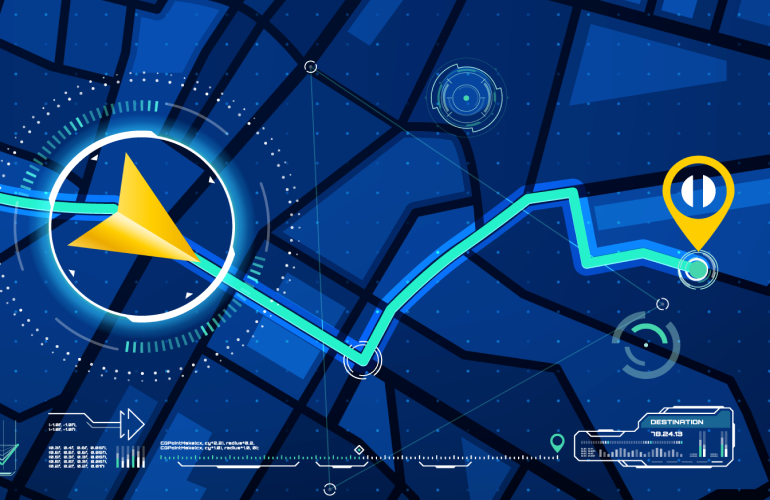
GPS and digital mapping technology fundamentally transformed road travel from a process dependent on paper maps and local knowledge into a real-time, data-driven system that shapes how billions of people move daily. This shift, spanning from military satellite systems in the 1960s to smartphone navigation in the 2000s, has created unprecedented benefits alongside significant unintended consequences that continue to reshape urban traffic patterns and driver behavior.
The Historical Arc: From Military Innovation to Ubiquitous Consumer Technology
The foundation for modern navigation emerged from Cold War military strategy. Beginning in 1963, The Aerospace Corporation and the U.S. Air Force began developing what would become the GPS system, envisioning what Dr. Ivan Getting called “lighthouses in the sky.” The first GPS satellite launched in 1978, with the system achieving full operational capacity in 1993 with 24 satellites providing global coverage. For three decades, GPS remained primarily a military tool until 1983, when President Reagan authorized civilian access, fundamentally opening the technology to commercial development.
The transition from military to consumer use accelerated through three distinct phases. The first commercial GPS receiver arrived in 1989 from Magellan Navigation, initially serving niche markets. Automotive integration began in 1981 with Honda’s Electro Gyrocator, which used dead-reckoning principles and gyroscopes rather than satellite signals due to intentional U.S. military signal degradation (called Selective Availability) that remained until 2000. The second major acceleration occurred in the 1980s-1990s when digital mapping replaced paper maps delivered on physical media. Tele Atlas began digital map delivery in 1984 through CDs and DVDs, establishing the technical foundation for integrating electronic positioning with satellite geolocation.
The consumer revolution crystallized in 2007 when Apple released the iPhone with Assisted GPS (A-GPS) and integrated Google Maps, making sophisticated navigation accessible to mass-market consumers. This single moment marked the inflection point from professional tool to mass consumer product. By 2009, Google Maps for Mobile launched and Waze emerged as a crowd-sourced alternative, introducing real-time traffic data collected from millions of user devices. Google’s acquisition of Waze in 2013 consolidated the market while simultaneously validating the crowd-sourced navigation model.
Today, the market penetration is near-total: Google Maps commands 1+ billion monthly active users with 67% of U.S. smartphone users relying on it, while Waze maintains 140 million active users despite flat growth in 2025, demonstrating the market’s maturation. More than 85% of mobile users enable location access on their devices, creating a data ecosystem of continuous positioning information.
The Technological Foundation: Why This Transformation Was Possible
The GPS revolution required convergence of seven specific technological breakthroughs, none of which alone would have sufficed:
Assisted GPS (A-GPS) enabled phones to acquire satellite signals rapidly by using cell towers to transmit information about which satellites were overhead, eliminating the need for devices to search for signals independently. Massive parallel correlation accelerated signal processing to enable longer, higher-precision tracking with minimal power consumption. High-sensitivity receivers allowed cheaper antennas and dramatically reduced the cost of adding GPS to consumer devices—from hundreds of dollars in the 1990s to just a few dollars by the 2000s.
Coarse time navigation allowed rapid Time-To-First-Fix (TTFF) without periodic wake-ups, critical for battery-constrained smartphones. Low transfer of ownership (TOW) decoding enabled receivers to extract positioning from weak satellite signals in dense urban environments. Host-based GPS architecture moved processing from dedicated chips to smartphone processors, eliminating expensive standalone hardware. Finally, RF-CMOS single-die integration consolidated all functions onto one affordable chip, making ubiquitous deployment economical.
These technical advances intersected with the explosive growth of smartphones: 500+ million GPS-enabled phones existed by the early 2010s, creating the critical mass of real-time location data necessary for crowd-sourced traffic systems to function effectively.
Immediate Practical Impacts: Efficiency, Safety, and Speed
The operational benefits of GPS-guided navigation are quantifiable and substantial. Digital navigation systems that incorporate real-time traffic information have reduced travel time by 15-25% in urban environments by enabling drivers to avoid congestion. For logistics and delivery, GPS route optimization has generated savings of 30-40% in operational costs by eliminating unnecessary distance and fuel consumption. Last-mile delivery—the most expensive component of shipping, accounting for 41% of total logistics costs—saw travel time reduced by 15% and distance by up to 25% through digital route optimization.
Beyond efficiency, GPS tracking has demonstrably improved road safety for commercial fleet operations. Real-time monitoring allows fleet managers to identify dangerous driving behaviors—speeding, harsh braking, sudden lane changes—and provide immediate feedback to drivers before accidents occur. This preventive approach, combined with automated route optimization that avoids congested and accident-prone areas, has contributed to measurable accident reduction in professionally managed fleets. GPS data also serves as an objective record in accident reconstruction, determining liability and supporting post-incident analysis that prevents future incidents.
Emergency response capabilities have been revolutionized by GPS-integrated systems. Real-time traffic monitoring enables first responders to dispatch vehicles more efficiently, while crowdsourced road closure data allows emergency managers to optimize evacuation procedures—recent wildfire evacuations integrated GPS data improved average escape times by 35%. The ability to instantly assess infrastructure status through continuous GPS telemetry has become critical for utility companies, hospitals, and public safety agencies during disasters.
The psychological benefit is equally significant: uncertainty about journey duration creates more stress than slow-moving traffic itself. GPS-enabled ETA (Estimated Time of Arrival) predictions allow travelers to plan activities with precision, reducing the anxiety of the unknown even when delays are inevitable.
The Ride-Sharing Revolution: A Whole Business Model Enabled
GPS and mapping technology didn’t merely improve existing transportation; they enabled entirely new business models that fundamentally restructured urban mobility. Ride-sharing companies like Uber and Lyft depend entirely on GPS real-time tracking to function—the technology permits continuous passenger-driver positioning, dynamic pricing based on demand patterns, and route optimization for individual trips. Without GPS, the economic proposition of matching drivers to passengers in real-time collapses.
Uber’s GPS-enabled tracking system demonstrates the platform economics this enables: passengers can monitor ride progress live, reducing uncertainty and anxiety while increasing repeat usage and trust. The platform uses GPS data to predict high-demand zones and allocate drivers proactively, optimizing both revenue and utilization rates. Lyft similarly leverages predictive analytics from massive GPS datasets to manage surge pricing and driver allocation, maximizing revenue per vehicle.
These platforms have transformed urban transportation access but also altered traffic composition and patterns. The decision to use ride-sharing increasingly reflects GPS capability as much as transportation need—the ability to instantly request and locate a vehicle creates behaviors that previously required planning and explicit commitment.
The Unintended Traffic Consequences: When Optimization Becomes Congestion
The aggregation of millions of individual drivers using navigation apps to optimize their own journeys has created unexpected systemic consequences that traffic engineers now struggle to manage. Research analyzing 90 news articles about navigation-induced traffic incidents identified eight negative social externalities, with traffic diversion being the most prevalent (occurring in 66% of documented incidents).
The fundamental mechanism is straightforward: when congestion appears on a highway, navigation algorithms suggest alternate routes through residential streets to avoid delays. This redistribution of traffic from major thoroughfares to minor roads designed for local circulation creates new problems for neighborhoods. The most documented case occurred in Sherman Oaks, Los Angeles, where residential streets near the “busiest urban freeway in America” experienced substantial traffic increases as drivers used Waze to circumvent rush-hour congestion. Residents reported “feeling trapped” in their own neighborhoods, unable to navigate safely due to non-local through-traffic that never previously existed.
This traffic redistribution creates compounding problems. The unexpected volume on narrow streets encourages speeding and reckless driving, as drivers unfamiliar with local conditions prioritize reaching their destination over following speed limits. Safety hazards escalate for pedestrians and cyclists who cannot predict the sudden influx of vehicles. Road infrastructure degrades more rapidly when subjected to traffic loads it was never engineered to sustain, accelerating maintenance needs. Pollution and noise impact accumulate in neighborhoods that bear no responsibility for creating the congestion that navigation apps diverted to their streets.
Local governments have responded with countermeasures: street closures, speed limit reductions, turn bans, and direct engagement with mapping companies to shape routing algorithms away from vulnerable areas. Several municipalities now collaborate with Google Maps and Waze to communicate about which streets should be excluded from navigation suggestions, representing an emerging market for managing the negative externalities of navigation technology.
The Broader Transformation of Travel Behavior and Urban Exploration
Beyond operational efficiency and traffic patterns, GPS and digital mapping have fundamentally changed how people interact with unfamiliar environments. The shift from paper maps to smartphone navigation eliminated the primary source of journey stress: the possibility of becoming lost. This reduction in uncertainty and environmental unfamiliarity has enabled more spontaneous, exploratory travel behavior.
Travelers attending new cities or events can now explore virtually before arrival, identifying key landmarks and charting efficient routes from their devices. This virtual exploration minimizes the stress of entering unknown territory, allowing confidence in unfamiliar places. The integration of business reviews, operating hours, real-time availability information, and cultural context means that digital maps have become gateways to experiential discovery rather than mere positioning tools.
Approximately 44% of drivers actively use navigation apps for travel planning, and this technology has proven more influential than others in shaping real-time travel decisions. Navigation services have been found to have net positive effects on mobility by helping users plan reliably and reducing “out-of-direction travel” caused by wrong turns. However, the impact is more modest than emerging technologies like ride-sharing and car-sharing, which fundamentally alter transportation mode choices.
The Future: Autonomous Vehicles and the Next Phase of GPS Dependency
GPS and mapping technology are not reaching maturity—they are becoming essential infrastructure for the next transportation revolution. Autonomous vehicles rely critically on high-definition (HD) maps that demand centimeter-level positioning accuracy and integrate spatial data with real-time positioning. These maps provide “rich, centimeter-level lane information, including road geometry, lane boundaries,” enabling vehicles to localize themselves precisely even in GNSS-challenged urban environments.
Autonomous vehicles require integration of GPS positioning with multiple sensor types—LiDAR, cameras, IMU (Inertial Measurement Unit), wheel odometers—creating positioning systems with submeter accuracy even when satellite signals degrade. The foundation for Level 2-3+ autonomous driving capability depends entirely on this multi-sensor GPS fusion architecture. Without revolutionary advances in GPS accuracy and reliability, the development of autonomous vehicles operating in urban environments remains constrained.
The Economic Transformation: Last-Mile Logistics and E-Commerce Enablement
GPS and digital mapping transformed logistics economics by making real-time route optimization economically viable. Companies can now dynamically adjust delivery sequences based on traffic conditions, delivery windows, and vehicle capacity constraints, reducing travel distance and fuel consumption simultaneously. The last-mile delivery sector—the most economically challenging component of supply chains—benefits from predictive analytics that forecast demand surges and optimize fleet distribution to minimize idle time.
Geofencing capabilities enable automatic alerts when vehicles enter or exit designated areas, improving fleet tracking and security while ensuring drivers adhere to safe routes. Real-time tracking provides customers with transparency about delivery status, reducing the “Where is my order?” (WISMO) inquiries that require customer service resources. This visibility transforms the customer experience from anxious uncertainty to informed anticipation, supporting e-commerce platforms’ ability to compete on convenience.
Key Limitations and Open Questions
Despite the transformative impacts, several uncertainties persist. While navigation apps have demonstrably improved route efficiency and reduced travel time, the broader relationship between technology adoption and total vehicle miles traveled remains unclear. Adding navigation capability may have enabled some marginal trips that wouldn’t have occurred with paper maps or hesitation about unfamiliar routes. The research suggests net positive effects on congestion management, but this conclusion comes with important caveats: aggregate benefits for the network may mask significant localized disbenefits for residential neighborhoods bearing the costs of traffic diversion.
The tension between individual optimization (each driver seeking the fastest personal route) and system-level efficiency (distributing traffic to minimize total congestion) remains fundamentally unresolved. Navigation apps optimize at the individual level using real-time data, but this creates collective outcomes—traffic concentration on residential streets—that no individual user anticipated or endorsed.
Technology as Mediator of Collective Outcomes
GPS and digital mapping technology fundamentally changed road travel by converting navigation from a planning problem solved with paper maps to a real-time dynamic optimization system solved through satellite positioning and crowd-sourced data. This shift has generated substantial benefits: 15-40% improvements in efficiency, enabled entirely new business models in ride-sharing and on-demand logistics, improved emergency response, and reduced travel anxiety through certainty about journey duration and destination discovery.
However, the widespread adoption of navigation apps has also illustrated a critical principle in technology adoption: technologies optimizing individual outcomes can generate collective outcomes that differ from the sum of individual preferences. The diversion of traffic to residential streets, the safety hazards created for pedestrians, and the unexpected infrastructure damage occurring in neighborhoods represent authentic costs that emerged from millions of independent decisions to follow navigation suggestions to their personal benefit.
The transformation continues. Autonomous vehicles will deepen GPS and mapping technology’s role in transportation systems, requiring centimeter-level accuracy and real-time sensor fusion. The convergence of crowdsourced data, machine learning, and autonomous systems will further integrate mapping technology into transportation infrastructure itself rather than merely supporting individual travelers.
For the user accustomed to instant navigation and real-time traffic information, the profound change is almost invisible—a blue dot on a map that moves with absolute precision, turn-by-turn guidance that never leads astray, and the knowledge that an unfamiliar destination is never truly unknown. This ubiquity obscures the decades of satellite engineering, algorithmic innovation, and mobile computing breakthroughs that made the transformation possible. Road travel fundamentally changed not when navigation became faster, but when it became certain.