The world’s most legendary road trips represent far more than mere transportation—they embody humanity’s deepest relationship with landscape, culture, and the open horizon. These routes have become pilgrimage destinations for travelers seeking transformation, capturing the essence of adventure through strategic combinations of natural wonder, historical significance, engineering achievement, and accessibility. What distinguishes these routes from ordinary drives is the convergence of several factors: extraordinary natural features, established infrastructure, proven seasonal viability, and the capacity to fundamentally alter travelers’ perspectives on geography and human possibility.
The Global Landscape of Iconic Routes
The world’s legendary road trips cluster into distinct categories defined by their core appeal and characteristics. Some routes—like Route 66 and the Wild Atlantic Way—emphasize cultural immersion and accessible discovery, attracting travelers seeking connection to place without extreme technical demands. Others, like the Karakoram Highway and Ruta 40, target adventurers willing to accept physical challenge and uncertainty for exposure to earth’s most dramatic geographies.
Route 66: America’s “Mother Road”
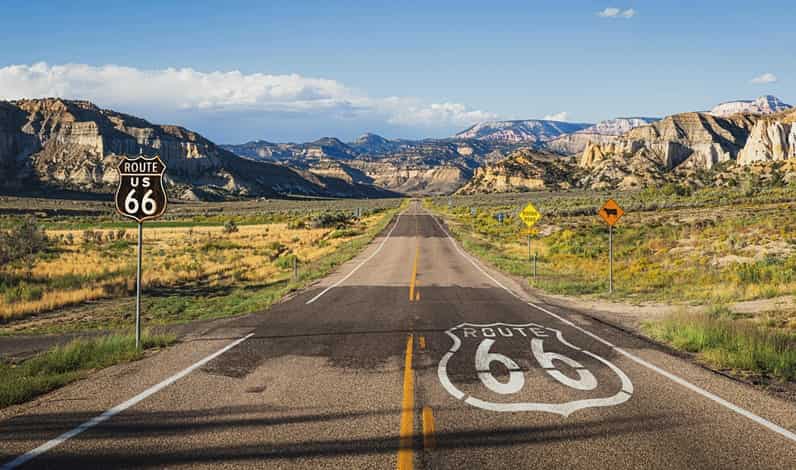
Spanning 4,000 kilometers from Chicago to Santa Monica, California, Route 66 transcends its practical function as a transportation corridor to become a cultural artifact. What makes this route legendary isn’t scenic drama alone—the American Southwest boasts many equally impressive landscapes—but rather its role as a defining symbol of American identity and the mid-20th century automobile culture. The road connects diners frozen in time, ghost towns reclaimed by desert, and the accumulated mythology of westward migration and entrepreneurial reinvention.
The appeal lies in its narrative coherence. Each segment reveals America’s layered history: from industrial Midwest through agricultural plains, across desert plateaus studded with Native American heritage sites, and finally to the Pacific coast. The journey catalyzes reflection on American aspiration and inevitable decline, as travelers encounter roadside attractions optimized for a era when driving itself was entertainment. This psychological dimension—the collision between nostalgia and present reality—explains why Route 66 remains legendary despite being largely superseded by Interstate highways.
The Wild Atlantic Way: Europe’s Longest Coastal Circuit
Ireland’s Wild Atlantic Way represents a different category of legendary road trip—one defined by accessibility combined with superlative natural beauty. Spanning 2,500 kilometers along the west coast from County Donegal’s Inishowen Peninsula to County Cork’s Kinsale, the route presents a deliberately curated tourism product comprising 1,000+ attractions across 157 discovery points.
What makes this route particularly special is the confluence of vertical dramaturgy and cultural depth. The Cliffs of Moher rise 700 feet above the Atlantic, their scale viscerally communicating the ocean’s power. The Dingle Peninsula offers some of Europe’s best whale and dolphin watching opportunities, with deep underwater canyons creating upwelling zones that concentrate marine life. The Aran Islands preserve Gaelic language and pre-modern settlement patterns in accessible island communities. Simultaneously, the route passes through regions deeply embedded in Irish literary, musical, and historical consciousness—from Yeats country in the north to sites immortalized in contemporary Irish song and story.
The Wild Atlantic Way’s brilliance as a legendary route stems from resolving the tension between development and preservation. High-quality roads accommodate modern travel logistics while the route’s length (typically requiring 7-10 days) forces travelers to slow down, creating conditions for genuine cultural encounter rather than superficial tourism.
The Great Ocean Road: Geology as Theater
Australia’s Great Ocean Road presents a different model of legendary status: a relatively short (243-kilometer) drive whose fame rests almost entirely on a single geological feature and the broader landscape context. The Twelve Apostles—a collection of limestone sea stacks rising to 50 meters from the Southern Ocean—have become globally iconic through photography and tourism marketing.
Yet the actual experience reveals why the Twelve Apostles achieved such prominence. These formations represent geology made visible: limestone cliffs, themselves once sea floor deposits, have been methodically eroded by the Southern Ocean’s relentless waves, creating caves that evolved into arches, which finally collapsed into isolated stacks. Each formation represents millions of years compressed into visible stone. The ongoing process remains observable—stacks have collapsed in 2005 and 2009, demonstrating that this landscape is actively transforming at human timescales.
The complementary coastal environment amplifies the appeal. Bells Beach hosts world-class surfing, the Split Point Lighthouse provides historical context, and the entire Great Ocean Road was constructed (1919-1932) by returned World War I soldiers, giving the route itself a layered historical dimension. Viewing the Twelve Apostles at sunset, when golden light refracts across the limestone, creates a visual experience that transcends ordinary scenic appreciation.
The Karakoram Highway: Engineering as Conquest
The Karakoram Highway represents a fundamentally different category of legendary road trip—one where the route itself becomes the central attraction. Extending 1,300 kilometers from Hasan Abdal in Pakistan to Khunjerab Pass at the Chinese border, this highway reaches maximum elevations of 4,714 meters, making it one of the world’s highest paved roads and the world’s highest paved international border crossing.
The route’s legendary status derives largely from the staggering difficulty of its construction. Completed in 1978 after nearly 20 years of effort, the highway required 24,000 workers to thread through the Pamir, Hindu Kush, Kunlun, and Karakoram mountain ranges—collectively Earth’s most dramatic and inaccessible terrain. During construction, workers faced constant hazards: avalanches, mudslides, and rockfalls that claimed numerous lives. The project’s completion marked a significant geopolitical achievement, connecting China with Pakistan and creating an economic corridor through territory previously isolated by geography.
Driving the Karakoram Highway transforms travelers into witnesses to extreme landscape and human perseverance. The route passes hanging glaciers descending from high peaks, glacial lakes of improbable turquoise, and settlements of mountain communities adapted to elevations most humans experience only briefly. The psychological experience combines achievement (having traversed extreme terrain) with humility—confronting geography’s capacity to render human settlement fragile and provisional.
Iceland’s Ring Road: Nature’s Greatest Hits
Iceland’s Ring Road (Route 1) offers a model of legendary road trip status based on exceptional concentration of natural phenomena combined with practical accessibility. The 1,332-kilometer loop circles the island, passing through landscapes that appear geologically recent—because they are. Iceland’s position atop the Mid-Atlantic Ridge and its active volcanism create terrain that feels newly emerged from creation mythology.
The route’s appeal stems from stacking multiple superlatives: the Vatnajökull ice cap, Europe’s largest ice cap outside the Arctic, possesses over 30 glacial tongues extending down its flanks. The Golden Circle encompasses Þingvellir National Park (where continental plates visibly separate), Gullfoss waterfall’s 32-meter plunge, and geysers demonstrating Earth’s internal heat. The south coast compresses waterfalls (Seljalandsfoss and Skógafoss), black sand beaches, and the Jökulsárlón Glacier Lagoon into geographic proximity. Mývatn Nature Baths offer geothermal soaking, while the Blue Lagoon represents geothermal energy’s recreational transformation.
Crucially, Iceland’s infrastructure supports access. Roads, while occasionally challenging, are well-maintained. Villages provide accommodations and services. The extended daylight in summer (midnight sun conditions) and dark skies in winter (Northern lights season) create different but equally compelling seasonal dynamics. A 7-10 day traverse remains feasible; the route sustains neither extreme remoteness nor technical difficulty, yet delivers uncompromising natural drama.
The Pacific Coast Highway: Coastal Drama in the Anthropocene
The Pacific Coast Highway represents the longest continuous American coastal route, extending over 1,300 kilometers from Washington’s Olympic Peninsula through California to Southern California’s Santa Monica. The route’s legendary status derives from the dramatic collision between the Santa Lucia Mountains and the Pacific Ocean at Big Sur—where cliffs plunge directly from mountain ridges to crashing waves.
What distinguishes the PCH from other coastal routes is its concentration of distinct ecosystems and human settlements. The journey encompasses temperate rainforests in Oregon (where coast redwoods tower and migrate monarchs congregate), the engineering feat of bridges spanning vast canyons, wine country passing through Sonoma and San Luis Obispo, quaint coastal towns, metropolitan Los Angeles, and San Diego’s Mediterranean climate. Marine wildlife—sea otters, harbor seals, elephant seals, and migrating gray whales—provides constant biological drama.
The route’s practical accessibility (well-paved throughout, abundant services) combined with exceptional scenery creates an experience that rewards both leisurely pacing and rapid transits. Big Sur’s McWay Falls waterfall cascading onto a beach enclosed by 80-foot cliffs represents one of Earth’s most photographed landscapes precisely because it achieves accessibility without compromising drama.
Ruta 40: South America’s Spine of Extremes
Argentina’s Ruta 40 occupies a different category entirely—a 5,224-kilometer traversal that ranks among Earth’s longest roads and passes through 21 national parks and 27 mountain passes. The route extends from Cabo Vírgenes in southern Patagonia north to the Bolivia border, running parallel to the Andes throughout.
What makes Ruta 40 legendary despite its remoteness and substantial unpaved sections is the uncompromising geological drama compressed across its length. The southern sections traverse Patagonian landscapes of extraordinary desolation—infinite steppes, glaciated peaks (including Perito Moreno Glacier), and salt-carved canyons. The central sections pass through wine regions, lake districts, and World Heritage sites. The northern sections reach altitudes approaching 5,000 meters at the Abra del Acay in Salta, making this the highest road outside the Himalayas. The route connects through deserts, canyons, salt flats, and finally to tropical regions bordering Bolivia.
Completing Ruta 40 requires 14-21 days and genuine self-reliance—sections remain unpaved, services are sporadic, and the landscape can be genuinely hostile. Yet this harshness represents the route’s appeal for committed adventurers: few contemporary road trips offer comparable exposure to raw landscape and isolation from human civilization.
The Amalfi Coast: Danger as Spectacle
Italy’s Amalfi Coast drive (SS163) occupies a unique niche: a brief (55-60 kilometer) but extraordinarily dramatic route famous partly for its engineering difficulty rather than distance. The road is frequently described as one of Earth’s most dangerous, hewn from near-vertical limestone cliffs that plunge hundreds of meters to the Tyrrhenian Sea.
The route’s legendary status combines natural beauty with visceral thrill. Hairpin turns reverse back on themselves; cliff-side villages like Positano and Amalfi appear to defy gravity, clinging to impossible slopes. Terraces of lemon trees and olive groves create agricultural patchworks on terrain that seems unsuitable for anything but bare rock. The narrow road creates genuine psychological challenge—several deaths occur annually from drivers miscalculating curves or losing focus.
Yet the Amalfi Coast has become one of the world’s most popular road trip destinations precisely because it concentrates extreme beauty and practical danger into manageable doses. A single day’s drive accomplishes significant drama; the UNESCO World Heritage designation (1997) recognizes both natural scenery and human cultural landscape. Unlike truly remote routes, Amalfi provides comfort—excellent restaurants, luxury hotels, and cultural amenities—combined with authentic thrilling challenge.
North Coast 500: Scottish Ruggedness Redefined
Scotland’s NC500 represents relatively recent legendary status, formally launched in 2015. The 830-kilometer loop around Scotland’s north coast connects mainland Britain’s most dramatic remaining wilderness. The route gains fame through concentrated exposure to maritime extremes—the wild North Sea meeting towering sea cliffs, isolated lochs surrounded by mountains, and beaches described as wild and remote.
The Bealach na Bà pass stands out as the NC500’s signature challenge—one of Scotland’s highest passes with steep gradients and hairpin turns that create genuine excitement for even experienced drivers. The journey from Inverness through Wester Ross connects deep cultural Scotland—regions where Gaelic remains active, traditional Highland life persists in modified form, and landscape overwhelms human infrastructure.
The NC500’s legendary status grew partly from deliberate branding positioning it as “Scotland’s Route 66,” though the comparison undersells the route’s ruggedness. Where Route 66 emphasizes accessible cultural history, the NC500 emphasizes raw landscape drama and genuine remoteness—there are fewer restaurants, services, or settlements; weather can be genuinely threatening; and the terrain demands respect.
Namibia’s Windhoek Loop: Africa’s Geometric Perfection
Namibia’s self-drive loop from Windhoek encompasses roughly 2,850 kilometers, connecting superlative natural features with extraordinary wildlife opportunities. The route typically includes the Sossusvlei dune field (where sand dunes reach over 300 meters), the Fish River Canyon (Africa’s largest canyon), Etosha National Park (one of Africa’s premier wildlife reserves), and diverse ecosystems from sand seas to grasslands to salt pans.
What distinguishes this route is the concentration of distinct ecosystems and the accessibility relative to Africa’s general infrastructure challenges. Roads are excellent (primarily tarred); wildlife sightings are reliably spectacular; and the landscape encompasses some of Earth’s most hypnotizing formations. The Sossusvlei dunes, photographed at sunrise when long shadows create dramatic relief, represent Africa’s most iconic desert landscape. Etosha’s salt pan, visible from space, creates surreal expanses where wildlife congregates at scarce water sources.
The route’s legendary status remains somewhat understated relative to its actual appeal—it combines African wildlife and geological drama in conditions of comparative safety and comfort, making it particularly valuable for travelers unable to tolerate the logistical demands of more remote African journeys.
Te Anau to Milford Sound: New Zealand’s Fiordland Gateway
New Zealand’s Te Anau-to-Milford Sound drive represents a different model entirely: a concentrated (120-kilometer, 2.5-hour) drive whose legendary status derives from spectacular density of features in minimal distance. The drive is famously challenging—described as “everything thrown at you: switchbacks, corners, inclines, avalanches, traffic, tunnels”—yet achievable without extreme adventure experience.
The appeal lies in the convergence of engineering with natural drama. The Homer Tunnel, carved through 1.2 kilometers of mountain rock, opens onto Milford Sound’s fiordal landscape—steep cliffs rising directly from dark water, with waterfalls cascading from heights and marine wildlife (seals, dolphins) accessible to cruise tourists. The psychological compression—from urban civilization through technical mountain driving into pristine wilderness in under three hours—creates powerful contrast that amplifies the landscape’s impact.
Cape Town to Cairo: Africa’s Continental Meridian
The Cape Town to Cairo overland journey represents the summit of continental road trip ambition: a 20,000-kilometer traverse of Africa’s entire length requiring 6-8 months and spanning multiple climate zones, wildlife regions, and cultural contexts. The standard route covers 8 countries (South Africa, Botswana, Zambia, Tanzania, Kenya, Ethiopia, Sudan, Egypt); more comprehensive versions add 9+ additional nations.
This journey’s legendary status rests on the extraordinary scope of experience compressed into single traverse: Victoria Falls’ geological drama, East African megafauna, the Rift Valley’s tectonic theater, Ethiopian highlands, the Nile River’s hydraulic engineering, and Egyptian antiquities. The journey concludes at Cairo’s pyramids—humanity’s most enduring monuments—creating symbolic closure to an epic continental crossing.
The route demands genuine commitment: 6+ months of continuous travel, budget allocation of $6,000-$20,000+, exposure to variable infrastructure and political conditions, and psychological willingness to navigate substantial cultural differences. Yet for committed adventurers, the experience provides unmatched exposure to African diversity and the continent’s human and natural drama.
What Distinguishes Legendary Status
Examining these routes reveals consistent factors that establish legendary road trip status:
Natural Superlatives: Every legendary route includes geological or biological features of genuine world significance—the Twelve Apostles’ engineered rock formations, Iceland’s glaciers, the Karakoram’s peaks, the Great Ocean Road’s marine drama.
Accessibility-Difficulty Balance: Legendary routes occupy a distinct middle ground. They challenge without demanding extreme expertise; they threaten without demanding rescue operations. The Amalfi Coast’s danger is real but manageable; Ruta 40’s remoteness is authentic but not life-threatening with basic preparation.
Narrative Arc: The best road trips tell stories. Route 66 narrativizes American aspiration; the Wild Atlantic Way embeds cultural history; Ruta 40’s north-south progression stages landscape transformation; the Cape Town-Cairo journey maps continental transition.
Infrastructure Adequacy: Without acceptable roads, fuel, and minimal services, even spectacular landscapes fail to become legendary. The difference between a legendary road trip and an expedition is largely infrastructure. Iceland’s Ring Road succeeds partly because roads are excellent; equally dramatic routes in Congo or Afghanistan remain dangerous rather than legendary.
Psychological Accessibility: Legendary routes accommodate diverse travelers—some seeking cultural connection (Route 66), others seeking natural spectacle (Great Ocean Road), others seeking adventure (Karakoram). They offer multiple interpretive frameworks rather than singular objectives.
Temporal and Seasonal Considerations
Route selection requires calibrating travel timing. Iceland’s Ring Road opens fully May-October, with winter roads becoming treacherous; summer brings midnight sun and accessible hiking. The Wild Atlantic Way suits autumn (moderate temperatures, manageable crowds), though it operates year-round. The Amalfi Coast faces summer overcrowding and remains uncomfortable in winter weather. Namibia’s loop works best during dry season (May-September) when wildlife concentrates at water sources. Route 66 accommodates any season but ranges from blazing summer heat to winter snow and ice in mountain sections.
Practical Hierarchy for Different Travelers
Accessible Legendary Routes (ideal for families or moderate adventure tolerance): Route 66, Wild Atlantic Way, Great Ocean Road, Ring Road Iceland, Pacific Coast Highway
Challenging but Rewarding (requiring experienced drivers and extended time): North Coast 500, Amalfi Coast, Te Anau-Milford Sound, Namibia Windhoek Loop
Expedition-Class (demanding serious preparation, self-reliance, and time): Karakoram Highway, Ruta 40, Cape Town-Cairo
The world’s legendary road trips represent humanity’s evolved relationship with landscape and movement. They occupy the intersection of geography, engineering, culture, and personal transformation. Unlike conventional tourism, road trips offer temporal extension—the journey itself becomes the content rather than the destination alone. These routes have achieved legendary status through combining superlative natural features with practical accessibility, genuine challenge with manageable risk, and the capacity to accommodate both leisurely contemplation and urgent adventure.
Whether drawn to Route 66’s Americana, the Wild Atlantic Way’s coastal drama, Iceland’s geological theater, or Africa’s continental scope, legendary road trips offer contemporary travelers something increasingly rare: the chance to experience landscapes and cultures at a pace that enables genuine understanding rather than photograph collection. The routes profiled here represent not merely excellent drives but crucibles of human experience, where the relationship between individual and landscape achieves temporary but transformative alignment.