
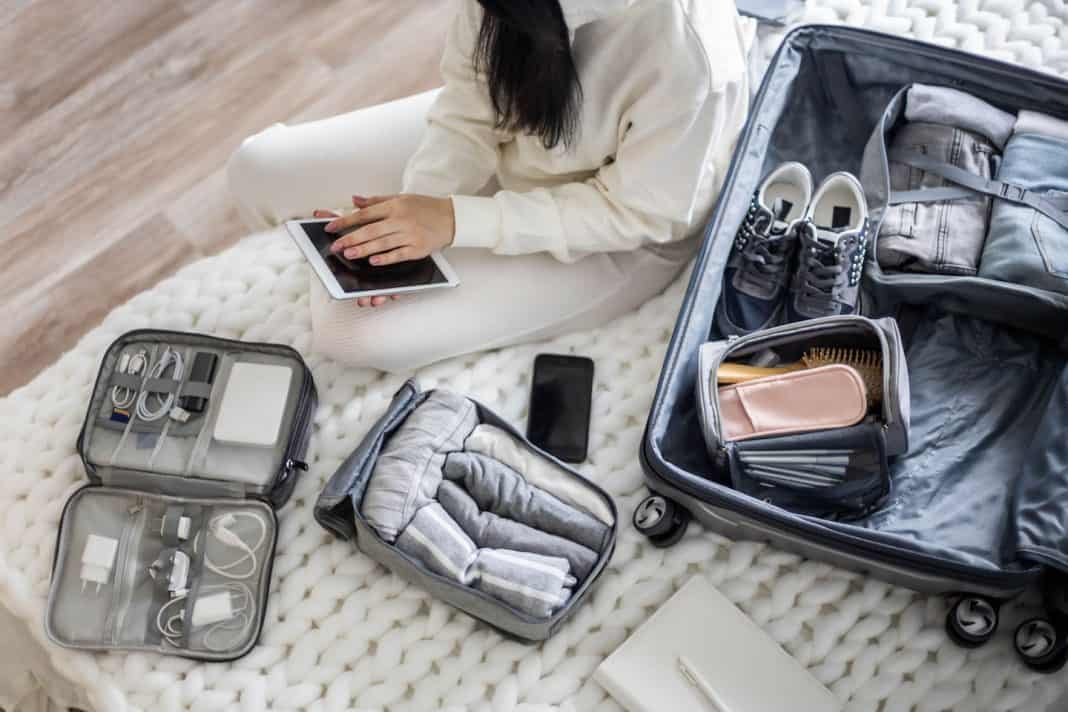
Packing well can make a trip smoother, cheaper, and far less stressful because smart organization helps travelers avoid forgotten essentials, excess baggage, and last-minute airport problems. The best packing hacks are not about bringing more; they are about bringing the right things in the most efficient way possible.
A well-packed bag gives you flexibility from the moment you leave home. It saves time at security, makes hotel check-ins easier, reduces the chance of losing important items, and helps you move through airports, stations, and city streets with less effort.
Start With a Packing System
The first packing hack is simple: never pack randomly. Building a checklist before every trip helps travelers avoid forgetting documents, chargers, medications, and other basics, while also reducing overpacking caused by panic or guesswork.
A good list should be organized by category rather than by memory alone. Common categories include clothing, toiletries, health items, documents, electronics, comfort items, and destination-specific gear, which makes it easier to spot what is missing before departure. This also helps travelers tailor their bag to the season, climate, and type of trip instead of packing the same way every time.
Another smart move is keeping a pre-packed essentials kit ready at home. Some travel advice recommends maintaining a dedicated toiletry bag or small travel kit with recurring items such as travel-sized liquids, charging cables, and basic accessories, so frequent travelers do not have to rebuild the same setup before every trip. This saves time and lowers the risk of forgetting small but important items.
Choose the Right Bag
Efficient packing begins with the right luggage. Travel guides recommend choosing a suitcase or backpack that matches the trip length and your travel style, whether that means a carry-on for short trips or a larger bag for longer or specialized travel.
A smaller bag often creates better decisions because it forces discipline. Many packing experts emphasize that smart travelers benefit from carry-on-friendly packing whenever possible, since it can reduce baggage fees, speed up airport movement, and limit the risk of lost luggage. Even when a checked bag is necessary, it still helps to treat space as limited and valuable.
The best bag is also one you can manage comfortably on your own. If your luggage is too heavy to carry up stairs, lift into storage, or move across uneven streets, then it is probably overpacked regardless of whether everything technically fits inside.
Pack Less Clothing, More Versatility
One of the most useful packing hacks is to build outfits, not piles of clothes. Some travel packing advice specifically recommends investing in multi-use, wrinkle-resistant pieces and sticking to a coordinated color palette so individual items can be mixed and matched into several combinations.
This strategy dramatically reduces volume. Instead of packing separate outfits for every day, travelers can bring fewer tops, bottoms, and layers that all work together, which creates flexibility without taking up as much space. Neutral colors are especially effective because they simplify combinations and reduce the need for extra shoes or accessories.
It is also worth remembering that many trips do not require as many clothing changes as people expect. Travel checklists commonly include essentials such as underwear, socks, T-shirts, comfortable shoes, sleepwear, and weather-appropriate outer layers, but they also show how easy it is to overdo optional clothing when the basics are already covered. A smart packing plan gives priority to utility, comfort, and layering over variety for its own sake.
Roll, Cube, and Compress
Among the most repeated packing tips is the advice to roll clothes instead of folding them. Travel sources note that rolling can save space and may reduce wrinkles, especially for casual clothing and soft fabrics.
Packing cubes are another widely recommended solution because they help divide clothing, accessories, and small items into organized sections, making it easier to find what you need without unpacking everything. They also help travelers group items by category, outfit type, or part of the trip, which is especially useful on longer journeys or multi-stop itineraries.
For bulkier pieces, compression bags can be useful in moderation. Packing advice aimed at both leisure and business travelers points out that compression bags or cubes can save room for sweaters, jackets, or other larger items, although they should be used carefully so the total weight of the bag does not become excessive. The key is to compress strategically, not to use compression as an excuse to bring far too much.
Some travelers also use the bundle wrapping method, where clothes are wrapped around a central core item to reduce creases and improve compactness. This can work particularly well for more structured garments, though cubes and rolling are usually the easiest systems to maintain throughout a trip.
Wear the Bulky Stuff
A classic packing trick that still works is wearing your heaviest items in transit. Travel guides often suggest wearing jackets, boots, and other bulky layers on the plane or train to free up luggage space and reduce the size of the packed load.
This matters more than many travelers realize. Outerwear and heavier shoes consume a disproportionate amount of suitcase space, so wearing them during the journey can make the difference between carry-on success and needing a larger bag. Even if you remove those layers once onboard, they are still not taking up valuable room inside your luggage.
The same logic applies to accessories. A scarf, hoodie, or light rain jacket can serve both as in-transit comfort and as practical clothing at the destination, giving you more function from the same item.
Keep Toiletries Small and Simple
Toiletries are one of the most common sources of overpacking, leaks, and security issues. Packing checklists recommend transferring products into travel-sized containers both to save space and to comply with carry-on liquid rules, especially when flying.
Some sources also recommend solid alternatives such as shampoo bars, which reduce liquid volume and can simplify airport screening. A dedicated toiletry bag stocked with repeat essentials like toothpaste, deodorant, and skincare basics makes packing faster and more consistent from trip to trip.
Smart travelers also trim toiletries to what they will realistically use. Standard hygiene lists usually include items such as toothbrush, toothpaste, deodorant, shampoo, body wash, skincare products, and grooming basics, but not every full-size home product needs to come along. A smaller, better-edited kit usually performs better in travel conditions than an oversized bathroom replica.
Protect Documents, Health, and Essentials
The most important items in your luggage are not usually the biggest ones. Travel packing guides consistently include documents, medications, health supplies, and security-related items among the highest priorities because forgetting them can disrupt the entire trip.
Carry essentials such as passport or ID, payment cards, insurance information, itinerary details, and any required visas in a secure, accessible place rather than buried deep in your main bag. Some checklists also recommend travel locks, money belts, neck wallets, or small concealed pouches for added security, especially in busy transit environments.
Medications deserve special attention. Multiple travel checklists emphasize packing prescription medicine, pain relief, cold or flu treatments, motion sickness tablets, diarrhea medicine, and a simple first-aid kit so travelers can handle minor issues without scrambling to find supplies in an unfamiliar place. Sunscreen, insect repellent, hand sanitizer, and lip balm also appear frequently because they solve common travel discomforts while taking up relatively little space.
Build a Better Carry-On
Your carry-on should be packed as if checked luggage might be delayed, even if you expect everything to go smoothly. Travel packing lists commonly recommend keeping valuables, documents, electronics, chargers, comfort items, snacks, an empty water bottle, and at least one change of clothes in your cabin bag.
That strategy protects you in several ways. It keeps critical items with you during the most vulnerable stages of travel and ensures that even if a checked bag is delayed, you still have the basics needed to function for the first day or night. For longer flights, items like headphones, eye masks, earplugs, a travel pillow, tissues, and a light layer can also make the journey noticeably more comfortable.
An electronics organizer is another small hack with outsized value. Travel advice highlights the usefulness of organizing chargers, cables, adapters, memory cards, and small devices in one dedicated pouch so they do not become tangled or scattered through different pockets. This makes both airport security and hotel unpacking much easier.
Pack for the Trip You Actually Have
One of the smartest hacks is to customize your packing list to the destination instead of using a generic formula. Good packing checklists often include seasonal and adventure-specific items such as cold-weather layers, rain gear, hiking shoes, mosquito protection, waterproof socks, wet bags, or water bottles depending on the nature of the trip.
This is where many travelers go wrong. They either underpack for environmental realities or overpack “just in case” items that never leave the suitcase. A better method is to think in terms of realistic conditions: weather, walking demands, cultural context, laundry access, and planned activities.
For example, a beach holiday, city break, business trip, and mountain trek all require different priorities. The most efficient travelers do not pack more than everyone else; they pack more precisely.
Use Small Extras That Solve Big Problems
Some of the best packing hacks involve tiny items with high practical value. Travel lists often mention universal adapters, reusable water bottles, tote bags, eye masks, earplugs, microfiber towels, dry bags, notebook-and-pen sets, and small flashlights as useful additions that improve convenience without taking much space.
Laundry tools are another underrated category. Several checklists include laundry bags, stain remover, or compact detergent solutions because they help travelers rewear clothing and pack fewer outfits overall. This is especially useful for long trips, carry-on-only travel, or destinations where you expect heat, rain, or frequent outfit changes.
A small pouch for daily-use items can also make a big difference. Keeping essentials such as tissues, lip balm, bandages, hair ties, chewing gum, and pain relievers in one small personal pouch helps you avoid digging through your entire bag every time you need something minor.
Pack to Reduce Stress
The real purpose of packing hacks is not just fitting more into a suitcase. It is reducing friction throughout the trip. Good packing means fewer forgotten items, less clutter, easier movement, faster unpacking, and a more relaxed travel experience from start to finish.
That is why the best travelers tend to rely on systems rather than last-minute improvisation. A checklist, a capsule-style wardrobe, packing cubes, small toiletries, a well-built carry-on, and a few carefully chosen extras can transform packing from a stressful chore into a repeatable routine.
In the end, the most effective packing hack is discipline. Bring less, organize better, and choose items that earn their place in your bag. When everything you pack has a clear purpose, travel becomes lighter in every sense of the word.