
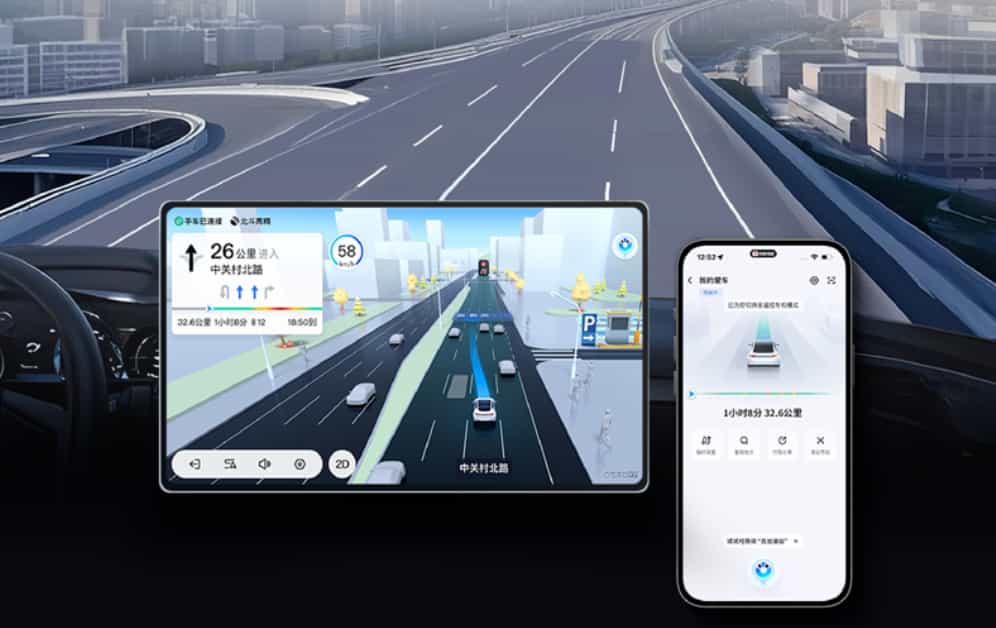
The digital navigation ecosystem has undergone a fundamental transformation, evolving from static offline maps to AI-powered, real-time intelligent systems that optimize every dimension of mobility. The global smart navigation apps market is projected to grow from USD 1.62 billion in 2024 to USD 5.4 billion by 2034 at a compound annual growth rate of 12.8%. More broadly, the digital maps market—encompassing navigation, geospatial intelligence, and location-based services—is expected to expand from USD 28.97 billion in 2025 to between USD 54.30 billion (by 2030) and USD 90.5 billion (by 2035), reflecting CAGR growth rates between 13.39% and 14.1%. This explosive growth is driven by converging forces: the rise of autonomous vehicles requiring high-definition mapping, smart city initiatives demanding real-time traffic optimization, 5G connectivity enabling instantaneous data exchange, and the integration of artificial intelligence for predictive and personalized navigation. The market’s expansion reveals a fundamental shift in how societies approach urban mobility, logistics efficiency, and location-based commerce.
Market Dynamics and Growth Drivers
Scale and Momentum
The navigation technology sector has achieved remarkable scale and is accelerating. Google Maps alone has surpassed 10 billion downloads and generated approximately USD 16.2 billion in revenue for the navigation app sector in 2022, establishing the category as a cornerstone of mobile software. The underlying market—encompassing hardware, software, cloud infrastructure, and data services—dwarfs the consumer app revenue alone, demonstrating the true economic impact of navigation technology across enterprise and public sectors.
North America currently leads with 32.1% market share in smart navigation apps, generating approximately USD 0.52 billion in 2024 revenue. However, Asia-Pacific has emerged as the fastest-growing region, with in-dash navigation systems alone expanding at 15.5% CAGR, driven by rapid urbanization, vehicle ownership growth in China and India, and substantial government investment in autonomous vehicle infrastructure. The in-dash navigation system market is expected to reach USD 62.53 billion globally, reflecting the automotive industry’s wholesale adoption of connected navigation as a core feature.
Primary Growth Catalysts
Five fundamental forces propel the market’s expansion:
- Real-Time Navigation and Mobility Demand: Industries including logistics, transportation, and ride-hailing require navigation precision that traditional static maps cannot provide. Ride-hailing services, which now operate in over 800 cities globally, have made sophisticated navigation algorithms essential infrastructure. Companies like Uber and Lyft are expanding into robotaxis, with the robotaxi market projected to reach USD 45.7 billion by 2030, amplifying demand for high-definition mapping and autonomous vehicle navigation systems.
- Autonomous Vehicle Development: High-definition maps with multi-layer topology and lane-level accuracy (within 17 centimeters) are foundational to autonomous vehicles at SAE Level 2+ automation and beyond. HD and real-time map layers are expanding at 14.8% CAGR, faster than the overall digital maps market, driven entirely by autonomous vehicle development. China leads autonomous vehicle development with robust government support, while the global autonomous navigation market itself is valued at USD 3.9 billion (2023) and expected to reach USD 8.3 billion by 2033.
- Smart City and Urban Optimization Initiatives: Cities worldwide are deploying integrated IoT-based navigation and traffic management systems to address chronic congestion and emissions. Columbus, Ohio reduced travel times by 17% through 600+ connected vehicles communicating with traffic signals. Los Angeles deployed AI traffic management across 88% of intersections, reducing travel times by 16% and emissions by 21%. San Francisco’s AI-driven system improved transit on-time performance from 72% to 94% since 2022. These measurable outcomes are compelling other cities to invest, creating sustained demand for navigation and mapping infrastructure.
- 5G Connectivity and Edge Computing: 5G networks enable sub-second query performance for billions of daily route requests with reduced latency compared to 4G. Edge computing brings localized processing, allowing vehicles and mobile devices to make real-time navigation decisions without server dependency. These infrastructure improvements unlock use cases previously impossible, including augmented reality navigation overlays and instantaneous multi-mode route optimization.
- Location-Based Services and Digital Commerce: Retailers leverage geospatial intelligence for store location strategy and foot traffic optimization. E-commerce platforms use location data for targeted marketing and inventory optimization, converting online and offline traffic into sales. Tourism navigation apps alone represent a USD 4.5 billion market (2024), projected to reach USD 14 billion by 2032, indicating how thoroughly navigation has penetrated consumer-facing business models.
Technology Architecture and Innovation Landscape
Artificial Intelligence and Machine Learning
Modern navigation systems function as predictive intelligence platforms, not merely route calculators. Machine learning algorithms analyze patterns in traffic flow, delivery times, and historical route data to predict optimal routes and anticipate bottlenecks before they occur. AI has demonstrated efficiency gains of 30% in route optimization for logistics, translating to measurable fuel savings and time reductions.
The sophistication extends to hyper-personalization. Algorithms now customize recommendations based on individual driving styles, historical patterns, and real-time conditions. Deep learning processes complex datasets in real-time, allowing systems to adapt dynamically to congestion, road closures, and changing weather. Reinforcement learning enables continuous improvement through trial and error, where systems learn optimal routing policies from experience. This evolution transforms navigation from a retrieval service (“How do I get there?”) to an intelligent mobility assistant (“Here’s where you should go”).
Autonomous Vehicle Integration and GNSS-AI Fusion
The integration of Global Navigation Satellite Systems (GNSS) with AI creates sensor fusion architectures essential for autonomous navigation. GNSS provides positioning data, while AI algorithms compensate for signal degradation using camera, LiDAR, and radar inputs. In urban environments where buildings block satellite signals, AI-powered dead reckoning maintains navigation accuracy by estimating vehicle movement from inertial sensors. This architecture ensures autonomous vehicles maintain safety and accuracy even when individual sensors fail.
Augmented Reality and Visual Navigation
Augmented reality is transitioning from novelty to practical necessity, particularly for indoor and complex outdoor navigation. AR navigation overlays digital directions onto smartphone camera feeds, eliminating the cognitive load of mentally translating 2D maps to 3D environments. Technologies like QR code-based indoor navigation provide millimeter-level precision, far exceeding Wi-Fi’s 5-meter accuracy. While current AR implementations fall short of science-fiction accuracy, emerging technologies like ultra-wideband sensors promise significant improvements, particularly in open environments like airports and stadiums.
Cloud Infrastructure and Real-Time Data Processing
Cloud deployment models account for 65.7% of the digital maps market and expand at 15.7% CAGR, enabling elastic compute and storage for billions of daily queries. Modern systems ingest real-time probe data from vehicles, smartphones, and IoT sensors, creating continuously updated maps that reflect current road conditions. Streaming pipelines deliver incremental updates to autonomous vehicle control stacks without requiring full map downloads, minimizing downtime.
Offline Navigation and Data Resilience
Despite emphasis on connected intelligence, offline maps remain critical for coverage in areas with poor connectivity and for data cost reduction in international travel. Google Maps enables region-level offline downloads with turn-by-turn navigation, while Apple Maps and other platforms provide similar functionality. Offline maps typically remain valid for 30 days before requiring updates, reflecting the balance between map freshness and user autonomy.
Competitive Landscape and Market Structure
Platform Distribution and Consumer Dynamics
Android dominates the smart navigation apps market with 58.3% platform share, reflecting both broader smartphone penetration and the affordability of Android devices across developed and emerging markets. iOS accounts for 41.7% share, concentrated in developed markets with higher average incomes. Mobile phones represent 49.5% of device usage, followed by in-vehicle systems (in-dash navigation, infotainment systems) and wearables, indicating the persistent primacy of smartphone-centric navigation despite vehicle integration.
Leading Market Players and Their Differentiation
Google Maps maintains market dominance with 10+ billion downloads and unmatched integration across the Google ecosystem. Its advantages include comprehensive business listings with continuous verification, expansive Street View coverage, and seamless integration with Google’s core services. However, competitors exploit specific weaknesses: Waze excels at crowdsourced real-time hazard reporting (speed traps, accidents, road closures), particularly valuable for drivers prioritizing traffic avoidance. Apple Maps emphasizes design quality and iOS integration, featuring Flyover 3D views, lane-guidance visualization, and tight Siri/CarPlay integration. Each platform has carved distinct competitive advantages, preventing any single player from capturing the entire market despite Google’s dominance.
Enterprise and B2B Market Concentration
The enterprise mapping market is more concentrated, with Mapbox, Esri, and TomTom serving fleet operators, logistics companies, and autonomous vehicle developers. These platforms provide customizable mapping, real-time analytics, and enterprise-grade APIs. For example, Toyota has integrated Mapbox technology for navigation in connected vehicles, while city governments use Esri’s ArcGIS for urban planning and mobility optimization.
Application Domains and Use Cases
Logistics and Last-Mile Delivery
Route optimization represents the highest-ROI application of navigation intelligence. AI-powered systems reduce delivery distances by 10-20%, lower fuel costs by optimizing vehicle utilization, and improve on-time performance through real-time adaptation. Predictive analytics enable companies to anticipate demand and proactively plan routes, reducing congestion and improving service quality. The logistics sector’s intense focus on cost reduction ensures sustained investment in navigation optimization technology, supporting continued market growth.
Ride-Hailing and Autonomous Mobility
Ride-hailing platforms have made navigation algorithms central to competitive performance. Dynamic pricing algorithms adjust fares based on real-time supply-demand balancing, while matching algorithms connect riders with nearby drivers in seconds. Route optimization algorithms maximize driver efficiency and minimizing passenger wait times. As Uber and Lyft transition toward autonomous fleets—with robotaxi pilots planned in Austin and Atlanta by 2025—navigation technology becomes even more critical, as autonomous vehicles cannot navigate without high-definition maps and continuous positioning.
Smart City Traffic Management and Infrastructure
Connected vehicle technology and V2I (vehicle-to-infrastructure) communication enable cities to optimize traffic flow at scale. V2I systems transmit real-time data between vehicles and traffic signals, lane markings, and other infrastructure, improving road safety and reducing congestion. Connected vehicles equipped with on-board diagnostics automatically feed probe data (position, speed, acceleration) into centralized traffic management systems. This creates feedback loops where city planners optimize infrastructure based on real-world usage patterns.
Retail Location Strategy and Customer Analytics
Retailers use geospatial analytics to identify optimal store locations, analyze foot traffic patterns, and create localized marketing campaigns. Location-based services enable dynamic promotions triggered when customers approach stores, converting impulse interest into sales. E-commerce platforms layer location data into recommendations, offering deals relevant to customers’ geographic location and proximity to merchandise.
Tourism and Destination Discovery
Tourism navigation apps constitute a distinct USD 4.5 billion market (2024), projected to grow to USD 14 billion by 2032. These applications combine navigation with points-of-interest discovery, multilingual support, offline maps for international travel, and AR features for immersive experiences. The segment’s 13.5% CAGR reflects growing travel volumes and travelers’ reliance on digital guidance.
Regulatory Environment and Data Privacy Challenges
Global Compliance Complexity
Navigation apps process extensive location data, creating significant privacy exposure. GDPR in Europe mandates explicit user consent for data processing, data minimization, and severe penalties for non-compliance—up to EUR 20 million or 4% of global revenue. The U.S. regulatory landscape is fragmented: California’s CCPA requires opt-out mechanisms and transparent data sale disclosures, while states like Illinois impose strict liability for biometric data misuse. Apps operating globally must navigate conflicting requirements simultaneously, requiring sophisticated privacy architecture that many developers struggle to implement.
Emerging AI and Biometric Regulations
AI-driven personalization and potential facial recognition for driver identification face increasing regulatory scrutiny. The EU’s proposed AI Act imposes categorized risk levels, with severe penalties for high-risk applications. Biometric data collection triggers particularly stringent requirements, as demonstrated by Illinois’s BIPA which imposes liquidated damages per violation rather than mere fines. These evolving frameworks create uncertainty for app developers and incentivize early compliance adoption.
Data Security and Third-Party Liability
Navigation apps commonly integrate third-party libraries for analytics, advertising, and backend services. However, third parties may access location data without explicit user consent, creating data protection risks. Vendor agreements must include robust data protection clauses, yet enforcement remains challenging. High-profile data breaches in navigation apps would damage user trust across the category and trigger regulatory backlash.
Future Trajectories and Emerging Trends
Convergence Toward Multimodal and Sustainable Routing
The next generation of navigation apps will seamlessly integrate multiple transportation modes—personal vehicles, public transit, bike-sharing, and walking—into unified route optimization. This multimodal integration directly supports urban sustainability goals by enabling alternatives to single-occupant vehicles. Simultaneously, apps are incorporating eco-friendly routing algorithms that minimize carbon emissions, allowing users to trade journey time for environmental impact. Governments’ climate commitments will likely incentivize or mandate such features, creating new competitive dimensions.
Predictive and Adaptive Navigation Interfaces
Contemporary navigation follows fixed command-response interaction patterns. Next-generation systems will employ predictive algorithms to surface relevant navigation and mobility options before users explicitly request them. Context-aware navigation will adjust dynamically based on time of day, current location, calendar events, and real-time conditions. Voice-enabled multimodal interfaces will enable hands-free interaction, expanding accessibility for drivers, individuals with disabilities, and elderly users.
Web3 and Decentralized Navigation Services
Emerging trends suggest potential integration of blockchain and Web3 principles into navigation services. Decentralized map contributions could enable community-driven corrections and reduce dependence on centralized map providers. Tokenized incentives could reward users for contributing real-time condition reports (hazard warnings, traffic observations), addressing the challenge of maintaining data freshness. However, decentralized approaches face significant technical hurdles—consensus mechanisms for map accuracy are complex, and current blockchain throughput cannot support real-time navigation queries.
Integration with Extended Reality (XR) and Spatial Computing
Augmented reality glasses and spatial computing platforms will enable seamless visual navigation without requiring smartphone interaction. Apple’s Vision Pro and other spatial computers will layer navigation onto users’ real-world view, eliminating the gap between digital directions and physical environments. This integration will be particularly valuable for pedestrians navigating complex urban environments and for workers in industrial or warehouse settings requiring hands-free guidance.
Autonomous Vehicle Ecosystem Maturation
As autonomous vehicles transition from pilot programs to commercial deployment, navigation technology becomes a central competitive advantage. Companies investing in proprietary HD mapping (Tesla), partnerships with established map providers (Uber/Lyft with Waymo and Mobileye), or platform approaches (Mapbox, TomTom) will dominate the autonomous mobility ecosystem. The robotaxi market’s projected growth to USD 45.7 billion by 2030 will drive navigation technology innovation and investment.
Market Risks and Constraints
Regulatory Fragmentation and Compliance Costs
Divergent privacy and safety regulations across jurisdictions impose substantial development and compliance costs, particularly for startups. Small companies may lack resources to navigate complex regulatory requirements, potentially consolidating the market toward large, well-capitalized competitors with dedicated compliance teams.
Cybersecurity and Infrastructure Vulnerability
Navigation systems are critical infrastructure. A successful cyberattack could disrupt traffic flows across entire cities or disable autonomous vehicle fleets. As these systems become more centralized (cloud-based), they present attractive targets for state and non-state actors. Security requirements will increase development complexity and costs.
Data Maintenance and Freshness Challenges
Maintaining accurate, current maps requires continuous investment in data collection, verification, and distribution. Road networks change constantly with construction, signal timing modifications, and lane reconfiguration. Automated approaches using crowdsourced probe data improve freshness, but remain subject to bias—rural areas and low-income neighborhoods often receive less frequent updates than affluent urban centers.
User Privacy Expectations and Backlash
Despite benefits, location tracking generates privacy concerns among substantial user populations. As data breaches occur and users become more aware of tracking, demand for privacy-preserving navigation alternatives may emerge. On-device processing and federated learning approaches could address these concerns but may sacrifice optimization benefits that require comprehensive location datasets.
Digital navigation has evolved from a convenience to a foundational technology shaping urban mobility, logistics efficiency, and commerce. The USD 5.4 billion smart navigation apps market by 2034, combined with a USD 54-90 billion digital maps ecosystem, reflects investments across consumer, enterprise, automotive, and government sectors. Growth drivers—autonomous vehicles, smart cities, 5G connectivity, and AI integration—are structural rather than cyclical, ensuring sustained expansion.
The competitive landscape remains dynamic: Google Maps dominates consumers, while specialized platforms serve enterprise and automotive niches. Emerging technologies including augmented reality, V2I infrastructure, and autonomous navigation are creating new competitive opportunities while raising regulatory complexity. Companies navigating this evolution must balance innovation with privacy compliance, leverage partnerships to share development costs, and maintain relentless focus on the core mission: enabling intelligent, efficient, sustainable mobility at all scales.
For entrepreneurs in Peru and the broader Latin American region, this expanding market presents opportunities in localized navigation services, last-mile delivery optimization, and hyperlocal commerce applications—particularly as smartphone penetration exceeds 80% across major cities and e-commerce continues its rapid growth trajectory.